
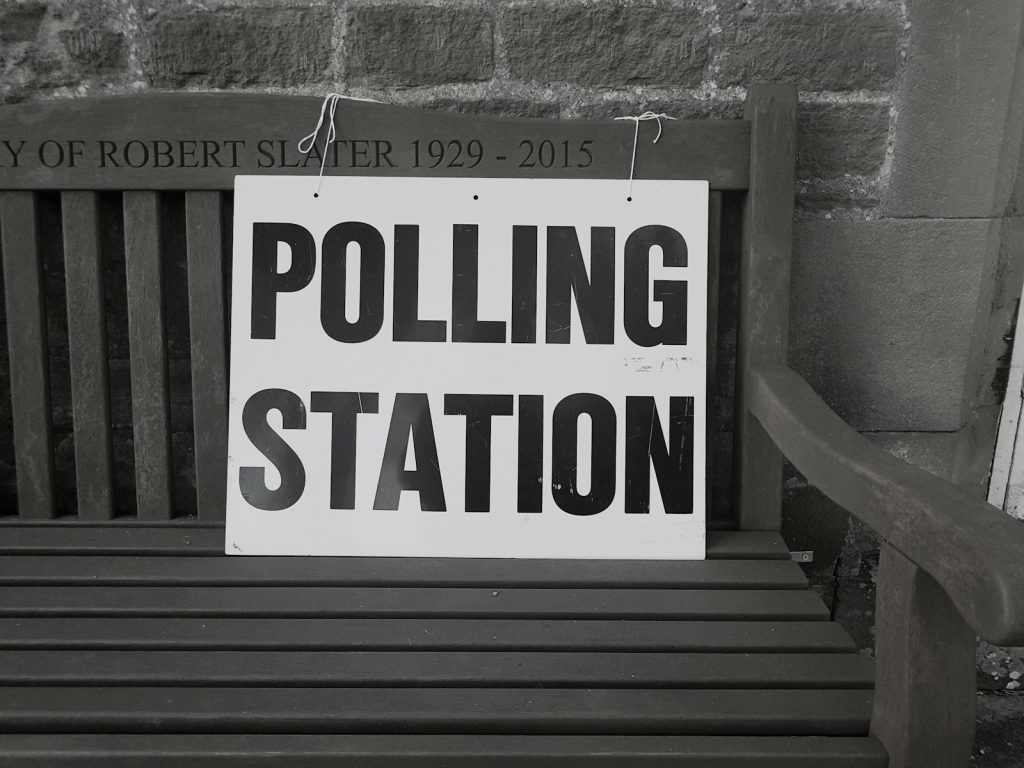
Registering to vote at a new address takes about five minutes online and needs your National Insurance number. Nothing about it happens automatically when you move, and the council tax notification does not trigger it, which is the assumption most people make.
It matters beyond voting. Credit reference agencies use the electoral register to verify identity, so being absent from it slows mortgage applications, can affect credit decisions, and occasionally causes a mobile phone contract or a bank account application to be declined for no reason anyone explains to you.
Summary: Register again once you have moved in, using the GOV.UK register to vote service, with your National Insurance number and date of birth to hand. Opt out of the open register while you are there, which stops your details being sold commercially and has no effect on your credit file. Whether you need photo identification to vote depends on where you live and which election it is, so check before polling day rather than on it.

Why it affects your credit file
Lenders check the electoral register to confirm you are who you say you are and live where you say you live. It is one of the cheapest and most reliable identity checks available to them, which is why an absent registration produces friction across every financial application.
The effect is indirect but real. Registration is not a credit score in itself, and being registered does not improve your creditworthiness. What it does is allow an automated identity check to pass, and a failed identity check often means an application is referred for manual review or declined outright.
The timing matters for anyone buying. Mortgage applications involve identity verification, and a buyer who moved six months ago and never registered can find that step stalling at exactly the point they need it to move quickly. Registering at a new address takes minutes; explaining to a lender why you appear at neither address takes considerably longer.
Renters are affected disproportionately because they move more often, and each move resets the clock. If you have moved several times in three years, being registered at each address in turn builds the address history that lenders and referencing agencies look for. Our guide to moving house with a mortgage covers the wider application process and where identity checks sit within it.
The two registers, and which to be on
There are two versions of the register. The full register is used for elections, for jury service and by credit reference agencies. The open register is a separate version that, as GOV.UK guidance on the electoral register and the open register explains, can be bought by any person, company or organisation and is commonly used for marketing. You can opt out of the open register while staying on the full one, which is what most people should do.
This is the single most useful thing to know when filling in the form, and it is easy to miss because it sits as a checkbox towards the end. Opting out of the open register has no effect on your credit file, your ability to vote, or anything else. It simply stops your name and address being sold on.
If you were opted in at a previous address, the setting does not follow you. Each registration is its own record, so a move is the natural point to change it. You can also opt out at any time by contacting your local electoral registration office, without re-registering.
- Full register. Elections, jury service, credit reference checks, and legally restricted uses. You cannot opt out and remain registered.
- Open register. Available to buy, commonly for direct marketing. Opting out is free and has no downside.
- Anonymous registration. Available where being on the register would put your safety at risk, for example for people fleeing domestic abuse. Requires supporting evidence and keeps your details off both versions.
The anonymous registration route is genuinely important and rarely mentioned. If your safety depends on your address not being findable, speak to your electoral registration office rather than simply not registering, because the second option costs you the credit-file benefit as well as the vote. Anonymous electors who want to vote in person are issued a separate document rather than using ordinary photo identification.
Registering, and what happens to the old address
Registering at a new address does not automatically remove you from the old one. The two councils reconcile it eventually, but that can take months, and being listed at a property you have left is worth clearing up rather than ignoring.
The application itself is straightforward. You need your name, date of birth, National Insurance number, current address and previous address if you have moved within the last twelve months. Without a National Insurance number the application still works but requires additional identity evidence and takes longer.
Registration is not instant. Your application goes to the electoral registration officer at the local council, who verifies it and adds you to the register. You should receive confirmation, and if none arrives it is worth chasing rather than assuming it went through.
To remove yourself from the previous address, contact that council’s electoral registration office directly. It is not usually urgent, but it matters if the property is being sold, since a register entry for a former occupant occasionally causes confusion in identity checks for the new owners.
Students are the recognised exception. It is possible to be registered at both a term-time and a home address, though GOV.UK is explicit that you may only vote once in any election. That is deliberate rather than a loophole, because students genuinely have two residences.
Northern Ireland works differently throughout. Registration there runs through the Electoral Office for Northern Ireland rather than the Great Britain service, and there is no annual canvass of the kind described below.

Voter identification, and where it does not apply
Whether you need photo identification depends on both where you live and which election it is. Electoral Commission guidance on voter identification sets out that it is required at United Kingdom parliamentary elections, including by-elections and recall petitions, at local elections in England, and at Police and Crime Commissioner elections in England and Wales. It is not required at Scottish Parliament or Senedd elections, or at council elections in Scotland or Wales.
That split is worth reading twice, because it is the opposite of a simple rule. A voter in Glasgow or Cardiff needs no identification for the devolved and council elections they are most likely to turn out for, and does need it for a general election. Northern Ireland is different again, having required photo identification at polling stations since 2003, long enough that it is simply how voting works there.
Two details make a move easier. Out-of-date photo identification is accepted provided it still looks like you, and the address on it does not need to match your current address, so a driving licence showing the old house is not a problem at the polling station. There are separate reasons to update that licence, but voting is not one of them.
The name is the part that does matter, and it catches people who changed it around the same time as moving. The name on your identification must match the name you are registered under, and if it does not, you have to register again. If the registration deadline for an election has already passed, take proof of the change such as a marriage certificate to the polling station. Small differences, such as Jim rather than James, do not count.
Anyone without accepted identification can apply for a free Voter Authority Certificate, which has its own deadline ahead of each poll. Postal and proxy votes do not transfer with a move either. If you vote by post, you need to reapply at the new address, because the arrangement is tied to a specific registration rather than to you personally. Deadlines are short and firm, and none of them are extended for people who moved recently, so if an election is announced during a move, deal with it immediately.
What the annual canvass does
Councils write to every household each year to confirm who lives there, and responding is not optional paperwork. Electoral Commission guidance on canvass penalties sets out a criminal penalty of a fine up to £1,000 for failing to give the registration officer the information required, and a much heavier penalty for giving false information.
Two different penalties get muddled together here, and it is worth separating them. The £1,000 figure attaches to the canvass, and to not supplying information the registration officer has asked for. Failing to register yourself after being formally required to do so is a separate matter, carrying a civil penalty of £80 under the requirement to register process. Neither is common, and both are avoidable in about five minutes.
The canvass letter usually arrives in late summer or autumn and can normally be answered online, by phone or by text in a couple of minutes using the security codes printed on it. Some versions only need a reply if something has changed, and the letter will say which sort you have been sent. Note that the requirement is to supply the information, not necessarily to post the form back.
Importantly, responding to the canvass is not the same as registering. If a new name appears on the household, that person still needs to register individually, because registration in Great Britain is individual rather than household-based. This trips up households where one person completes the form for everyone.
If you move shortly after a canvass, do not wait for the next one. Register at the new address straight away, since the canvass is a housekeeping exercise rather than the mechanism for keeping your own record current.
Where it sits among the other notifications
Set against the other address changes, registration is unusual in being both slow to take effect and quietly consequential, which is a poor combination for something people postpone.
| Notification | Time to take effect | Cost | What it affects |
|---|---|---|---|
| Electoral register | Weeks, on a periodic update cycle | Free | Voting, jury service, credit identity checks |
| Council tax | Days | Free | Billing from your occupancy date |
| Driving licence | 1 to 2 weeks online | Free | Legal duty, correspondence, insurance |
| Vehicle logbook | Record instant, document about 5 days | Free | Legal duty, penalty notices |
| Bank and cards | Immediate | Free | Transactions, credit applications |
Everything else on that list takes effect within days. Registration has to be verified by a person at the council and then published on an update cycle, so it can take several weeks to appear even when the application went through cleanly.
Anyone planning a mortgage application, a remortgage or a rental reference within the next few months should therefore do this early rather than treating it as low priority. The lag is exactly long enough to cause a problem if left. The full sequence of who else needs telling is in our guide to who to inform when you move house.
A short note on what registration does not do. It does not tell the council you have moved for council tax purposes, it does not update your driving licence, and it does not affect your address with HM Revenue and Customs. Those are all separate notifications, and the electoral registration officer does not pass information between departments in the way people assume.
Equally, telling the council about council tax does not register you to vote. The two sit in different departments under different legislation, and a household can be paying council tax at an address while nobody in it appears on the register. That combination is exactly what causes a mortgage identity check to fail.
When registering is more complicated
Registration is tied to residence, which is straightforward for most people and genuinely awkward for some: those between addresses, staying with family, living in temporary accommodation, or with no fixed address at all. Most guidance assumes a clean move from one settled address to another. Plenty of moves are not like that.
If you are staying with family for a period between properties, you can register at that address, and doing so is better than a gap in your record. One caveat is worth stating plainly rather than glossing over: council tax liability follows who actually lives at a property, so if you have genuinely moved in as a second adult, the householder’s single person discount is affected by that fact whether or not you register. Registering does not create the liability, and it does not give you any interest in the property, but it is not a way around the question either. If the stay is short and you are not resident, ask the council rather than guessing.
People with no fixed address can register using a Declaration of Local Connection, which allows registration by reference to a place where you spend time rather than a residential address. It exists precisely for this situation and is under-used.
Second homeowners may register at both properties where both are genuinely residences, though again only one vote may be cast in any election. Holiday homes rarely qualify, and the test is residence rather than ownership.
This is general information rather than legal advice, and electoral registration rules differ in parts of the UK. Your local electoral registration office can advise on an individual situation.
Finally, check it went through rather than assuming. You should receive confirmation from the electoral registration officer, and if nothing arrives within about a month it is worth contacting the council directly. Applications do occasionally fail on a mismatched National Insurance number or a name spelled differently from official records, and nobody chases you about it.
How EcoGreen Movers fits into the first week
Five-minute jobs get done when the move itself was organised and get postponed for months when it was not. EcoGreen Movers works to fixed quotes and confirmed arrival windows, using reusable crates that leave with the van rather than filling a hallway for a fortnight. Our guide to unpacking room by room in the first week covers the rest of that fortnight.
If you would rather hand over the packing as well, our Premium service covers professional packing to whatever specification you set, alongside dismantling and reassembly. Standard Plus takes the furniture without the packing, and Standard is the loading and unloading on its own. We also supply packing boxes and materials on their own, without booking a move, for anyone doing it themselves, and storage where one address ends before the next begins.
We run residential moves across the UK, including London, Manchester and Edinburgh. Get in touch for a quote.
Frequently asked questions
Does registration transfer automatically when I move?
No. Nothing about it is automatic, and telling the council about council tax does not trigger it. You need to register again at the new address, and you may remain listed at the old one until that council’s records catch up.
Does it affect my credit score?
Not as a score, but it affects identity verification, which is often what actually blocks an application. Credit reference agencies use the full register to confirm you live where you say, so being absent causes referrals and declines that are hard to diagnose.
Should I opt out of the open register?
For most people yes. The open register can be bought by any person or company and is used mainly for marketing. Opting out has no effect on your credit file, your vote or anything else, and the setting does not carry over from a previous address.
Do I need photo ID to vote after moving?
It depends where you live and which election it is. Photo identification is needed at United Kingdom parliamentary elections across Great Britain, at local elections in England, and at Police and Crime Commissioner elections in England and Wales. It is not needed at Scottish Parliament or Senedd elections, or at council elections in Scotland or Wales. Out-of-date identification is fine if it still looks like you, and the address on it does not need to match your new one.
What if I changed my name when I moved?
The name on your photo identification has to match the name you are registered under. If it does not, register to vote again. If the deadline for an upcoming election has already passed, take proof of the change, such as a marriage certificate, to the polling station. Minor differences like a shortened first name do not matter.
Can I be registered at two addresses?
Sometimes, most commonly students with a term-time and a home address, and some second homeowners where both are genuine residences. You may only vote once in any election. Ownership alone does not qualify a property.
In summary: five minutes, but do it early
Register at the new address once you have moved in, with your National Insurance number to hand, and opt out of the open register while you are there. Contact the old council separately to be removed from that address.
Do it in the first fortnight rather than eventually. It is the slowest of the free notifications to take effect, and it is the one that quietly blocks mortgage and credit applications months later if it was never done.