

Almost everybody underestimates how much they own. Not by a little, either. Removals firms describe arriving to jobs booked as a Transit that turn out to need a Luton, and it happens often enough that experienced surveyors simply assume the customer’s estimate is low and work from what they can see instead.
This is not carelessness. It is a predictable thinking error, and understanding why it happens is most of the fix. The rest is a method for counting properly, which takes about an hour and saves the version of moving day where half your possessions are still in the hall at four o’clock.
What follows covers why estimates go wrong, how volume is actually measured, the rooms where guesses fall apart, and how to produce a number you can hand to a firm with confidence.

Why Nobody Can Estimate Their Own Possessions
Three things work against you, and they compound.
You see rooms, not contents. Standing in your living room, what registers is the room: sofa, table, television, done. What does not register is that the sofa alone is roughly two cubic metres, or that the bookcase against the wall represents fifteen boxes once emptied. Furniture is visible. The volume inside furniture is not.
Storage hides quantity by design. That is the entire purpose of a cupboard. Everything in your house that is working properly is concealing how much of it there is, and the better organised you are, the worse your estimate will be. Tidy households are frequently the most surprised.
Bedroom count is a terrible proxy. Firms ask how many bedrooms because it is a starting point, not an answer. Two identical three-bedroom houses can differ by half a van, depending on whether one has a garage, a shed, a loft and a decade of accumulation. The bedrooms are the part that varies least.
There is also a simple perception problem. People estimate in terms of what they can picture carrying, and a house move is not a series of carryable objects, it is a stacked volume. Those are different quantities and the second is always larger.
What a Cubic Metre Actually Looks Like
Removals is priced on volume, usually expressed in cubic metres or cubic feet, and most people have no working sense of either. That is worth fixing because it makes every other number in this article usable.
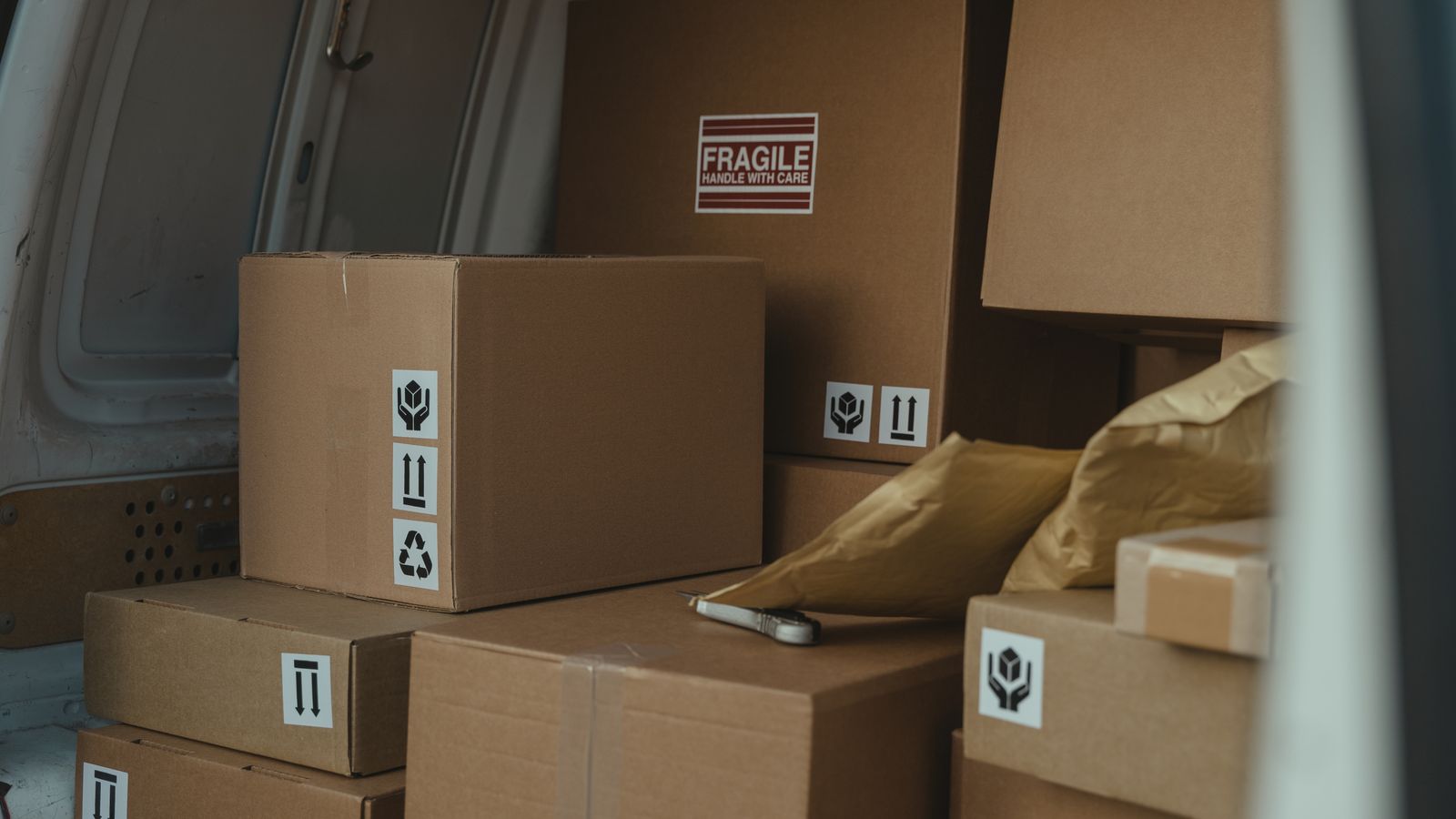
A cubic metre is a box a metre on each side. Picture a standard washing machine and add a little: that is roughly it. As a rule of thumb, around ten standard medium cartons make up about one cubic metre, once stacked without gaps.
Rough volumes for common items, useful for building an estimate rather than for quoting precisely:
- Three-seat sofa: around 2 cubic metres
- Double bed with mattress: around 1.5
- Double wardrobe: around 1.5
- Chest of drawers: around 0.6
- Dining table and four chairs: around 1.2
- Washing machine or fridge: around 0.5 each
- Standard medium carton: around 0.1
Add those up for a modestly furnished two-bedroom flat and you are already past ten cubic metres before touching the kitchen cupboards. That is the moment most people’s mental estimate breaks, and it is why a written count beats a confident guess every time.
The Rooms Where Estimates Fall Apart
Guesses do not fail evenly across a house. They fail in specific places, and the same ones every time.
The garage
The single biggest offender. Garages hold bikes, tools, paint, garden equipment, tyres, sports gear, camping kit and whatever came out of the last house and never made it indoors. Almost nobody includes the garage when picturing their move, and a full one can add several cubic metres on its own.
The loft
Out of sight and therefore out of the estimate. It is also the space people intend to clear before the move and frequently do not, which turns a hypothetical zero into a real number on the day. Clearing it early is the only reliable answer, and our guide to clearing the loft before moving house covers the method.
The garden and shed
Garden furniture, pots, a mower, a barbecue, children’s play equipment. These are bulky rather than heavy, which means they eat van space disproportionately. A trampoline dismantled is still a surprising amount of trampoline.
The kitchen
Kitchens look compact and pack out enormously. Every cupboard is dense with objects, and a typical family kitchen produces more cartons than any bedroom in the house. It is also the room that takes longest to pack, which compounds the problem on the day.
Books, and anything else dense
Books are a volume problem and a weight problem at once. A shelf that looks unremarkable becomes several small cartons, and small is deliberate, because a large box of books is too heavy to lift safely. Tools, records and tinned food behave the same way.
How to Count Properly, in About an Hour
The method is dull and it works. Do it room by room with a notebook or your phone, and do not skip the boring rooms.
Start with furniture, item by item. Write down every piece that will travel. Not categories, individual items. Two bedside tables is two entries.
Then estimate cartons per room. Open every cupboard and drawer as you go, and count what comes out of them rather than what you can see. A useful check: one full kitchen cupboard is roughly one medium carton.
Include the invisible rooms. Loft, garage, shed, under the stairs, the airing cupboard, the space under every bed. These are where the count is either won or lost.
Photograph everything as you go. Photographs of each room, plus the loft hatch, the garage and the shed. This is the single most useful thing you can send a removals firm, and it takes minutes.
Then add ten per cent. Not because you are careless, but because the count above is a snapshot and moves generate items. Round up rather than down at every point of doubt.

Why the Survey Is the Real Answer
Everything above helps, and none of it replaces someone experienced looking at the actual house.
A surveyor is not checking your arithmetic. They are looking at things that never appear in a customer’s estimate at all: whether the wardrobe comes apart, whether the sofa clears the turn on the stairs, how far the van can park from the door, whether there is a lift and whether it is big enough, what needs crating, and what will need two people rather than one.
That last category is where quotes actually move. Volume is the headline number, but access and handling are what turn a five-hour job into an eight-hour one.
Surveys are done in person or by video, and video is genuinely fine for most homes provided you walk the whole property rather than the presentable parts of it. Open the loft hatch on camera. Show the garage. Point the phone into the cupboard you were hoping nobody would ask about. Our guide to reading a removals quote explains what the resulting document should tell you.
What Happens When the Estimate Is Wrong
Worth knowing plainly, because it explains why firms press for accuracy rather than accepting a cheerful guess.
A second trip. On a local move this costs hours and additional charges. On anything over about twenty miles it can mean the job does not finish that day at all.
Overloading, and the damage that follows. A van packed beyond what it should hold means items wedged rather than stacked, and things break in transit that would otherwise have arrived intact.
Weight limits, which are legal rather than negotiable. A van can run out of permitted payload before it runs out of floor space, particularly with books, tools or appliances. That is not a matter of squeezing things in.
Time pressure at the wrong end. Where the volume was underestimated, loading takes longer, and the delay lands on the unloading, which is when everyone is already tired and the keys arrived late anyway.
Decisions nobody wants to make on the day. When the last of the load will not fit, someone has to choose what stays behind, standing in an empty hallway with a crew waiting.
The Fastest Way to Reduce the Number
If the count comes back higher than expected, there are only two useful responses, and one of them is much cheaper.
Book a bigger vehicle, which costs what it costs. Or reduce the volume, which costs nothing and reduces the price of the move at the same time.
Decluttering is the only job in a house move that makes the move itself cheaper, and it works best on exactly the spaces that broke your estimate: the loft, the garage, the shed and the back of every wardrobe. Anything disposed of before the survey never appears in the quote at all.
Where things are worth keeping but will not fit the new place immediately, storage bridges the gap, though it works best for items you have decided to keep rather than items you have decided not to decide about.
Weight, Which Is a Separate Problem
Volume gets the attention, and weight quietly causes as many difficulties.
Every vehicle has a maximum permitted payload, and it is a legal limit rather than a guideline. A van can reach that limit while still looking half empty, which surprises people who have been thinking purely in terms of floor space.
The usual culprits are predictable. Books, obviously. Tools and workshop equipment. Tinned food, which is why nobody should be moving a full store cupboard. Weights and gym equipment, which are dense beyond anything else in a house. Ceramic plant pots, particularly the large ones nobody wants to leave behind.
This is also why packing advice insists on small boxes for heavy things. It is not fussiness. A large carton filled with books is beyond what one person should lift, and the injuries that result are back injuries rather than dropped crockery.
The practical version: mention anything unusually dense at survey stage. A home gym, a piano, a safe, a substantial book collection or a workshop full of tools all change the vehicle and crew required, and none of them shows up in a volume estimate.
What Changes the Number Besides Volume
Two moves with identical contents can be priced quite differently, and the reasons are worth knowing before a quote arrives and looks higher than expected.
How far the van can park from the door. Carrying distance is time, and time is the second component of any quote. A van that parks outside is a materially cheaper job than one parked a hundred metres away.
Stairs, and how many. A third-floor flat with no lift is a different job from a ground-floor house, with the same contents. Lifts help, provided the lift is large enough for the furniture, which is a question worth asking rather than assuming.
Dismantling and reassembly. Beds, wardrobes and some flat-pack items need taking apart. That is routine work, and it is time that has to be priced somewhere.
Awkward single items. Pianos, safes, large appliances and anything that needs specialist handling or extra people. These are not excluded, they simply need planning.
Timing. Fridays, month ends and the summer months are the busiest periods, and availability affects price everywhere in the industry.
None of these can be judged from a phone call describing a three-bedroom house, which is the underlying argument for a proper survey rather than an instant figure.
How EcoGreen Movers Handles Volume
Our surveys ask about the spaces people forget, deliberately, because those are the ones that change the number. Loft, garage, shed, under the stairs, and anything already in storage elsewhere.
The honest position on quotes is that a low one built on a low estimate is not a saving. It is a number that will change on the day, at the least convenient moment, and it helps nobody. A survey that produces a slightly higher figure than you hoped is doing its job.
Our packing services also remove the largest source of uncertainty, because a crew packing your kitchen knows exactly how many cartons it produced. That is the Premium level, and it is the only version of this where the volume figure stops being an estimate at all. Standard Plus sits below it and shrinks the number a different way, since dismantled beds and wardrobes take up a fraction of the space they occupy assembled. Standard is the loading and unloading with the counting left to you. Buying boxes from us also helps the arithmetic, because a consistent set stacks to a predictable cubic volume in a way that assorted cartons from six different shops never do. Residential moves run across the UK from London, Manchester and Edinburgh. Have a look at the EcoGreen Movers homepage or ask for a quote, and mention the garage.
Frequently Asked Questions
How much do people usually underestimate by?
Substantially, and consistently enough that surveyors expect it. Figures circulating in the industry suggest most customers understate their volume by roughly a third, though the exact number varies by source. The safe assumption is that your instinct is low rather than high.
Can I just book by number of bedrooms?
It is a starting point rather than an answer. Two identical three-bedroom houses can differ by half a van depending on garage, loft, shed and how long the household has lived there. An itemised list is far more reliable than a bedroom count.
What is a cubic metre in practical terms?
A box a metre on every side, which is roughly a washing machine plus a little. About ten standard medium cartons stack into one. A three-seat sofa is around two cubic metres on its own, which is usually the point at which people recalibrate.
Which rooms do people forget most often?
The garage first, then the loft, then the shed and garden. All three are out of sight when picturing the move, and all three are bulky. The kitchen is the other one, not because it is forgotten but because it packs out far larger than it looks.
Is a video survey as good as someone visiting?
For most homes, yes, provided you show the whole property rather than the tidy parts. Open the loft hatch on camera, walk into the garage, and point the phone inside cupboards. A video survey is only as accurate as what you are willing to show.
What happens if it does not all fit on the day?
Usually a second trip, with the time and cost that involves, and on longer moves the possibility that the job runs into the next day. Occasionally it means deciding what stays behind while a crew waits, which is the worst moment to be making that choice.
Does decluttering actually reduce the quote?
Yes, provided it happens before the survey. Removals is priced principally on volume, so anything disposed of beforehand never enters the calculation. It is the only preparation job that makes the move itself cheaper rather than just easier.