
The essentials box is the one that travels in your car rather than the van, and it exists because the van is unloaded in an order nobody controls and the box you need at 9pm is invariably at the back. Everything in it shares one quality: you would be genuinely stuck without it before the unpacking starts.
Most people assemble it on moving morning from whatever is left out, which is exactly why it usually contains a kettle and no teaspoon. Packed deliberately two days before, it is the difference between a manageable first evening and a frustrating one.
Summary: Pack a clear plastic box, not cardboard, and keep it in the car. Documents and keys, chargers, laptops and phones, basic tools, toilet roll and soap, a kettle and mugs, medication, bedding for the first night, and a change of clothes for everyone. Some of that is not merely sensible: the industry model terms, published by the British Association of Removers, whose consumer code is a Chartered Trading Standards Institute Approved Code, list valuables and portable computing devices among goods that must not be submitted for removal at all.

What is worth including
| Category | Contents | Why it earns its place |
|---|---|---|
| Documents | Passports, completion paperwork, tenancy agreement, insurance details | Irreplaceable, and excluded from the removal contract |
| Keys and access | All sets, alarm codes, meter cupboard key | Handed over on the day, easy to misplace |
| Electronics | Laptops, tablets, phones, power banks, chargers, an extension lead | Excluded from the contract, and sockets are never where you need them |
| Tools | Screwdrivers, Allen keys, a craft knife, scissors, tape | Beds need reassembling before anyone sleeps |
| Bathroom | Toilet roll, hand soap, towels, toothbrushes, toothpaste | Needed within the first hour, invariably |
| Kitchen | Kettle, mugs, teaspoons, tea, coffee, milk, bin bags | Morale, and somewhere to put rubbish |
| Cleaning | Cloths, spray, kitchen roll, a roll of bin liners | The new place is rarely as clean as promised |
| Health | Prescription medication, painkillers, plasters | Never pack medication in the van |
| Bedding | Duvet, pillows and a set of sheets per person | The alternative is unpacking at midnight |
| Clothing | One change of clothes each, plus pyjamas | Removes any urgency from unpacking wardrobes |
| Light | A torch and a few spare bulbs | Sellers frequently take the bulbs |
| Children and pets | Familiar toy, snacks, food and bowls, litter tray | Everyone settles faster |
The tools entry is the one people leave out and then need first. Beds are usually dismantled to get them through doorways, and reassembling one at 10pm without an Allen key is a specific kind of miserable. Keep the fixings for each bed in a labelled bag taped to its frame, and keep the tools in this box rather than in a toolbox on the van.
Spare bulbs sit here for the same reason. Light fittings are usually included in a sale but bulbs frequently are not, and arriving at a dark house on a winter evening is an avoidable start.
Why it should never go in the van
This is stronger than a preference. The British Association of Removers model terms list jewellery, watches, precious stones and metals, money, deeds, securities, stamps, coins, mobile telephones and portable media and computing devices among goods that must not be submitted for removal or storage unless the remover agrees in writing. The October 2025 version also names lithium-ion batteries and e-cigarettes on fire safety grounds.
That last addition catches people out, because a power bank, a laptop, a cordless drill battery and a child’s scooter all contain lithium cells. If it charges, assume it belongs in the car unless you have agreed otherwise with the company.
Even where a remover does agree to carry something on that list, the standard position is that they will not accept liability for loss or damage attributable to the special nature of the goods. So a laptop in the van is not simply riskier; it is usually outside the protection you thought you had.
There is a practical reason as well as a contractual one. A removal van is loaded to fill space efficiently, which means the last items in come out first and everything else emerges in an order determined by the load rather than by your priorities. A box on the van is a box you cannot reach.
There is also a timing issue. If your sale and purchase complete on the same day, the van may arrive at the new property before you do, or you may be waiting for keys while it sits outside. Anything you might need during that gap has to be with you, and medication in particular cannot wait.
Use a clear plastic box with a lid rather than cardboard. You can see the contents without opening it, it will not collapse if the boot gets wet, and it is instantly distinguishable from the eighty brown boxes going into the van. Label it on all four sides. If you have a lot of people, use one box per person for clothing and toiletries plus a single shared box for tools, kitchen and cleaning, since one enormous box that two people cannot lift defeats the purpose.

Packing it at the right moment
Assemble it two days before the move, not on the morning. On the day itself you are managing a crew, a van and a deadline, and the essentials box assembled in that state is always missing something.
Two days is the right lead time because it leaves you able to use the items in the meantime while knowing where they are. Put the box somewhere obvious, tell everyone in the household not to pack it, and add the last few things, the kettle and the chargers, on the morning.
Take it to the car before the crew arrive rather than during the load. Anything left inside the house on moving day will be loaded by someone being helpful, and a crew working efficiently does not stop to ask about a box in the hallway.
A second box is worth considering for a longer move or where completion times are uncertain: food and drink for the day itself, since removals days routinely run past every meal and shops near a new house are an unknown quantity. Sandwiches, snacks, water and something for the crew is a small courtesy that goes a long way.
Our guide to what to do the week before you move covers where this sits in the wider countdown.
The first hour in the new house
Before a single box comes in, walk the property with the essentials box in hand and do four things: photograph the meters, find the stopcock and consumer unit, check the heating and hot water work, and confirm every key you were given fits something. On the meters, Ofgem guidance on moving home explains that you are on a deemed contract with whichever supplier serves the property until you arrange your own, so the reading is the line between their bill and yours.
This takes ten minutes and it is the only window in which the house is empty and you can see everything. Once the van is unloading, the walls are behind boxes and nobody looks again for a fortnight.
The keys check matters more than it sounds. Sellers hand over what they have, which is not always a complete set, and discovering that nothing opens the back door or the window locks is much better resolved on the day, while the agent is still contactable, than a week later.
Many people change the locks on the front door within the first few days anyway, since you have no way of knowing how many sets exist. It is not expensive and it removes a genuine uncertainty.
Test the heating even in summer. A boiler that does not fire is far easier to get fixed in the first week, while you may still have recourse, than in November when you discover it.
What people wish they had included
The standard essentials list is largely agreed. The interesting question is what it consistently misses, and the answer is remarkably consistent from one move to the next.
| Item | Why it is missed | What happens without it |
|---|---|---|
| Extension lead | Assumed unnecessary | One socket, three chargers, no lamp |
| Bin bags | Nobody thinks about rubbish | Packaging piles up on the floor by hour two |
| Torch | Assumed the lights work | No bulbs, and the fuse box is in a dark cupboard |
| Toilet roll | Assumed the sellers left some | An urgent trip out within the first hour |
| Phone numbers on paper | Everything is on the phone | Flat battery and no way to call the solicitor |
| Meter reading notes | Not thought of as an essential | No record of the handover point |
| Something to sit on | Assumed the sofa arrives early | Standing up for the first three hours |
The items that get forgotten are the ones people assume will already be there, and every one of those assumptions concerns the previous occupants. They took the bulbs, they used the last of the toilet roll, and they did not leave the wifi details. Assume nothing was left.
A printed page of key phone numbers is also worth more than it sounds. Solicitor, estate agent, removals company, both energy suppliers and a locksmith, on paper, in the box. Moving day flattens phone batteries faster than any other day of the year, and every number you need is on the device that has died.
Add a pen and paper for the meter readings while you are at it, though photographs are better evidence. Our guide to setting up utilities in a new home covers what to record and why.
Do the same thing in reverse at the property you are leaving. A final walk through every room including the loft, the garage, the shed and the airing cupboard, after the van has gone, catches the things that get left: a coat on the back of a door, the contents of a high shelf, and whatever is in the freezer.
Take the meter readings then too, and leave a note for the new occupants with those readings, the supplier names, the wifi details and the location of the stopcock. It costs five minutes and it is the single most useful thing anyone can leave behind.
When one box is not the right approach
For a move where you are not sleeping at the new property on the first night, or where completion is uncertain and you may end up in a hotel, the essentials box becomes an overnight bag instead. Pack for the situation rather than the convention.
Chains collapse late, keys arrive at five in the afternoon, and occasionally people spend a night somewhere unplanned. If your completion is at all uncertain, a small overnight bag per person alongside the shared practical box is a better structure than one box assuming everything goes to plan.
Long-distance moves need more, because the van may arrive the following day. In that situation you are effectively camping for a night, and bedding, towels, more clothing and a fuller set of kitchen basics all move from the van into the car.
Moving into storage rather than a home changes it again. Everything you need for the interim period has to come out before the unit is filled, and retrieving one box from the back of a packed unit is a genuinely bad afternoon. Pack the interim items last so they are at the front. We offer storage alongside the move for exactly this situation, which at least means one company knows what went in and in what order.
And if you have a cat, its carrier, litter tray, food and familiar bedding are part of this set rather than an afterthought. Our guide to moving house with a cat covers the safe room and why the animal travels in the car too.
If you are renting rather than buying
Put the inventory and check-in report in the box, and photograph any existing damage before furniture arrives and obscures it. That evidence is what protects your deposit, and GOV.UK guidance on tenancy deposit protection confirms your landlord must put the deposit in a government-approved scheme within 30 days and give you the scheme details, with a free dispute service if you disagree about deductions at the end.
There is no statutory window for querying a check-in report, so whatever deadline applies is the one written into your own report or tenancy agreement. Read it on the first day rather than filing it, because that is the only point at which the property is empty and your photographs will actually prove something.
Date-stamped photographs of every room, plus close-ups of anything already marked, scratched or stained, take fifteen minutes and settle almost every deposit argument before it starts.
How EcoGreen Movers works around it
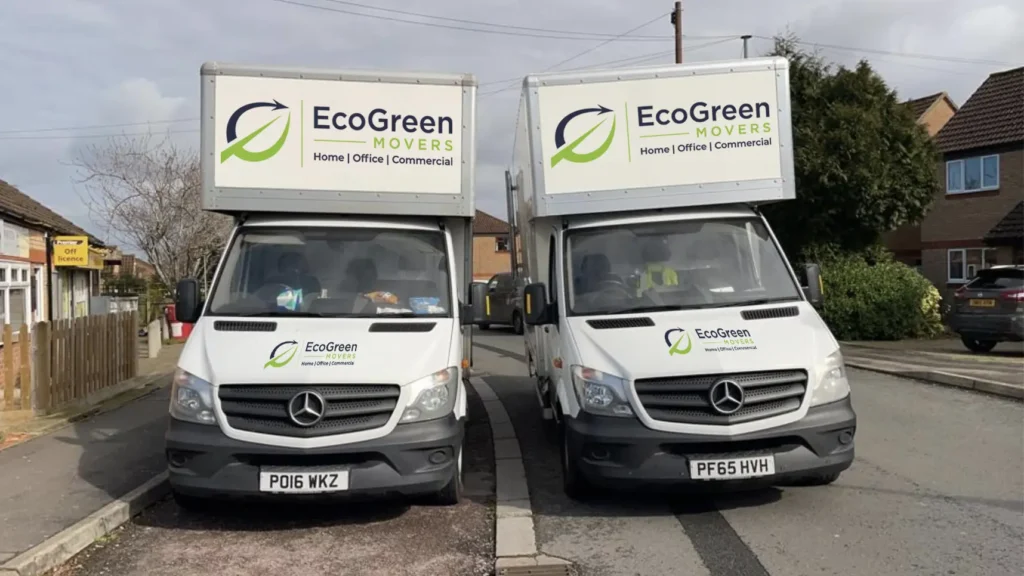
Tell the crew which box is staying with you and it will not be loaded. EcoGreen Movers works to confirmed arrival windows rather than vague morning slots, which is what makes it possible to load the car properly before the van arrives rather than improvising around it. On Premium, where we do the packing, the essentials box is the one thing we will ask you to pack yourself, for the reasons above. Standard Plus covers furniture dismantled and rebuilt, and Standard the loading and unloading.
We run residential moves across the UK, including London, Manchester and Edinburgh, and we can unload priority rooms first if you tell us which they are. If you want a clear plastic box for this job rather than a cardboard one, we supply packing materials on their own without booking a move. Get in touch for a quote.
Unpack it last, not first. The point of the box is that everything in it is already accessible, so leaving it intact for a few days means you can still find the scissors and the tape while the rest of the house is in flux. Emptying it into a drawer on the first evening undoes the whole exercise.
Frequently asked questions
What should go in it?
Documents and keys, phone chargers and an extension lead, laptops and phones, basic tools, toilet roll and toiletries, a kettle with mugs and teaspoons, cleaning cloths and bin bags, medication, bedding and a change of clothes for each person, plus a torch and spare bulbs.
Should it go in the van?
No. Keep it in your own car. Under the British Association of Removers model terms, valuables, documents, mobile telephones and portable computing devices must not be submitted for removal or storage unless the remover agrees in writing. A van is also loaded to fill space, so items emerge in an order you do not control.
Can I put my laptop in the removal van?
You should not. The current model terms list mobile telephones and portable media and computing devices among goods that must not be submitted, alongside lithium-ion batteries and e-cigarettes on fire safety grounds. Laptops, tablets, phones and power banks belong in the car.
When should I pack it?
Two days before the move, adding the kettle and chargers on the morning. Assembling it on moving day, while managing a crew and a deadline, is why so many essentials boxes end up missing something obvious.
What kind of box works best?
A clear plastic box with a lid. You can see the contents without opening it, it survives a wet boot, and it is instantly distinguishable from the cardboard going into the van. Label it on all four sides so nobody loads it by mistake.
Do I need one for each person?
For a family, yes for clothing and toiletries, plus one shared box for tools, kitchen and cleaning items. A single box large enough for a whole household is too heavy to be useful and defeats the point of keeping it accessible.
Keep the car itself sensible too. An essentials box, an overnight bag each and the pets is a full car for most families, and cramming the boot with fragile items on top of that is how something gets crushed on the journey. Anything that will not fit comfortably belongs in the van. Glassware in particular should be boxed properly days before the crew arrive rather than wedged into the boot at the last minute, and our guide to how to pack glasses for moving covers how to do that.
In summary: clear box, in the car, packed early
Pack it two days out in a clear plastic box, label it, and put it in your own car before the crew arrive. Documents, keys, chargers, laptops, tools, toilet roll, kettle, medication, bedding and a change of clothes cover almost every first evening, and several of those are excluded from the removal contract anyway.
Then add the four things people always forget: an extension lead, bin bags, a torch with spare bulbs, and a printed list of phone numbers. Assume the previous occupants left nothing behind, because they usually did not.