

If you are looking for a moving company with packing service included, EcoGreen Movers handles both. We move households across the UK from offices in London, Manchester and Edinburgh, and packing sits within our Premium package, arranged around whatever you actually want packed.
That is the short answer, and you can ask us for a quote whenever you are ready. The rest of this article is the useful part: what these services actually include, what sort of boxes get used in a typical removal, and what goes in which box, room by room.
Because whether somebody else packs your house or you do it yourself at eleven o’clock with a roll of tape and a grudge, the principles are the same.

What a Packing Service Actually Includes
Packing & moving companies structure this in different ways, so it is worth understanding the levels before comparing quotes. At EcoGreen Movers there are three packages, plus materials on their own if that is all you need.
Standard. Loading and unloading. The crew arrives, loads what you have already packed, drives it, and unloads into the right rooms at the other end. This suits households who are happy to do their own boxes and want the heavy work handled by somebody else.
Standard Plus. Everything in Standard, plus dismantling and reassembling your furniture. All of it, rather than a short list of selected items. Beds, wardrobes, tables, and the flat-pack that was built in the room it now refuses to leave. Plenty of people arrive at this level the moment they measure the bed frame against the doorway.
Premium. Everything in Standard Plus, plus professional packing services to whatever extent you ask for. Some households want the entire house packed. Others want the kitchen and the breakable things done properly and are perfectly happy doing the bedrooms themselves. Premium is specified around what you want covered rather than sold as a fixed list.
Boxes and materials on their own. If you are packing yourself and simply need supplies, we can provide those without any of the above.
Ask what any quote covers before you compare it with another. Some removals packing service quotes include materials and some price them separately, and two numbers that look far apart are often describing different jobs. Our guide to reading a removals quote goes through what should be itemised.
The Boxes Used in a Typical Removal
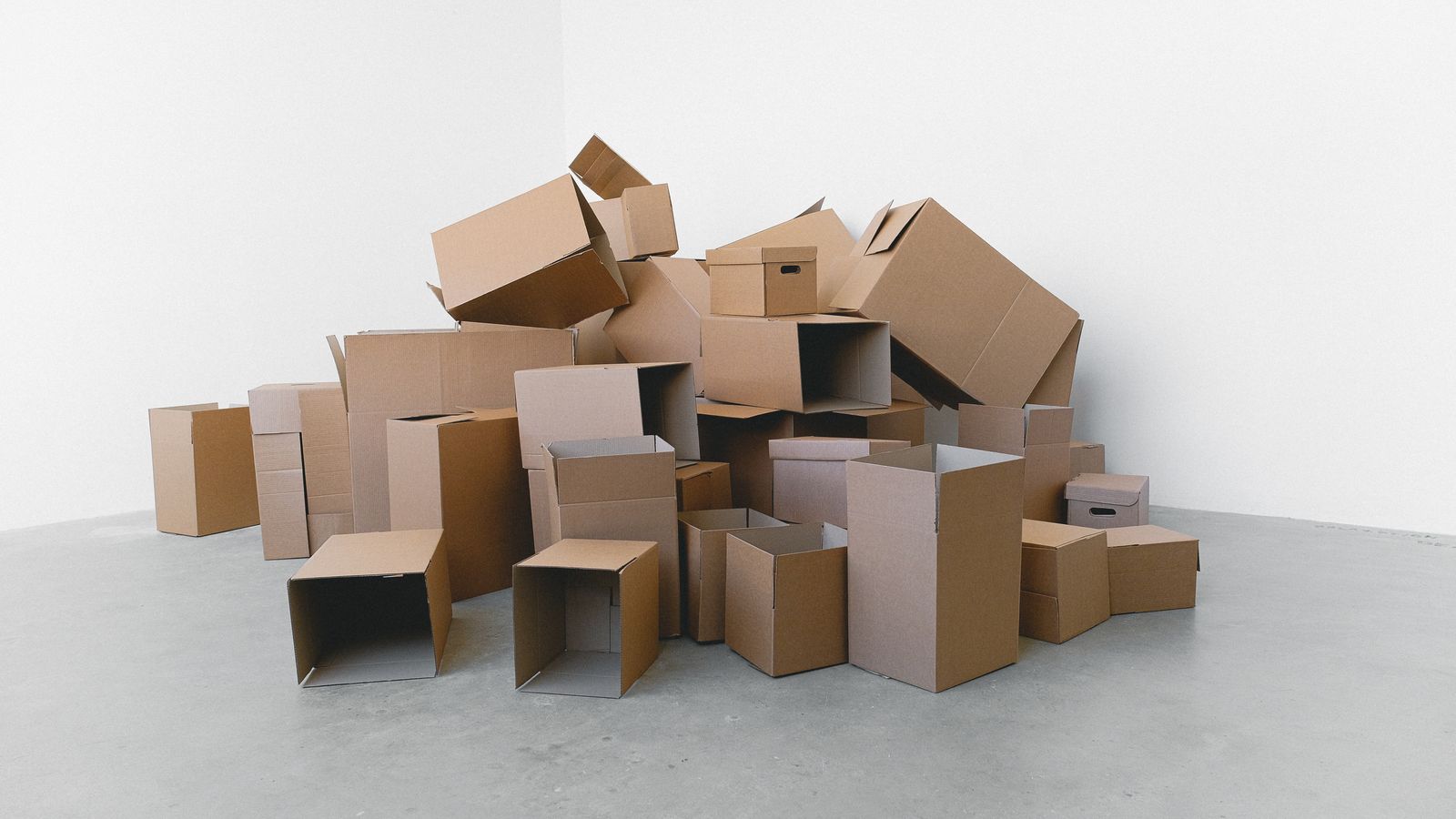
Walk into any house being packed by professionals and you will see roughly the same set of containers. Different packing and moving companies stock different ranges, so treat this as a general picture of what is commonly used across the industry rather than a description of any one firm’s kit.
Standard or medium carton. The workhorse. Roughly the size of a small bedside cabinet, and the box most things end up in. Large enough to be useful, small enough that a full one is still liftable.
Large carton. Taller, and intended for bulky light things: bedding, cushions, coats, lampshades. The trap here is that a large box will happily hold forty kilograms of books and then refuse to be picked up. There is more on this in our piece on where to buy moving boxes and what they should cost.
Book carton or small box. Deliberately small, because it is meant for dense items. Books, tools, tinned food, records, anything with weight per centimetre.
Wardrobe carton. A tall box with a hanging rail across the top. Clothes go straight from the wardrobe on their hangers and come out the same way at the other end. It is the single most satisfying box in a move.
Layflat or picture carton. Wide and thin, made for framed pictures, mirrors and artwork. Often adjustable so the box closes snugly around the frame.
Dish pack or double-walled carton. Thicker cardboard, sometimes with cell dividers, for crockery and glassware. The double wall is doing real work rather than being an upsell.
Alongside the boxes sit the materials: packing paper, bubble wrap, tape, marker pens, furniture covers, mattress bags and corrugated sheeting. If you are packing yourself and want to keep costs down, our guides to finding free cardboard boxes and whether IKEA moving boxes are any good are both worth a look.
The One Rule That Governs Everything
Heavy items go in small boxes. Light bulky items go in large boxes. Almost every packing mistake is a version of getting that backwards.
It is worth knowing that there is no legal maximum weight for lifting in the UK. The Health and Safety Executive, usually shortened to HSE, publishes guideline figures that are commonly quoted as around 25kg for men and 16kg for women when a load is held close to the body at waist height, and the HSE is clear that these are guidelines for identifying low-risk lifting rather than safe limits. Those figures drop considerably when you are lifting above shoulder height, twisting, or carrying something down a staircase, which describes most of moving day.
The practical version: if you cannot comfortably lift a box and carry it across the room, it is too heavy, and nobody is impressed. The HSE also has straightforward guidance on lifting technique, which comes down to planning the lift, keeping the load close, and not twisting.
Two more rules that apply everywhere. Fill every gap, because empty space lets contents move and moving contents break. And pack by room rather than by category, so unpacking has some logic to it.

Room by Room: What Goes in Which Box
This is the detail that makes the difference, whether you are doing it yourself or watching somebody else do it properly.
The Kitchen
The hardest room in the house, and the reason house packing services exist. It holds more objects than anywhere else, most of them breakable, dense or awkwardly shaped.
Plates go in small or double-walled boxes, standing on edge like records rather than stacked flat. A stack of plates lying down cracks under its own weight over a bumpy journey. On edge, they support each other. Wrap each one in packing paper first and pad the bottom of the box generously. If you are handling the kitchen yourself, our guide to how to pack crockery for moving covers bowls, serving dishes and everything else that does not stand on edge as neatly as a dinner plate. For the plates themselves, how to pack plates for moving sets out the wrapping fold and the box height that suits them.
Glasses and mugs go upright, each wrapped individually, with paper stuffed inside the bowl of wine glasses to support the shape. Cell dividers help enormously if you have them. Heavier glassware at the bottom, delicate stems at the top. If you are packing the kitchen yourself rather than handing it over, our guide to how to pack glasses and stemware sets out the wrapping and stacking in full.
Pots and pans go in medium boxes, nested with paper between them, handles tucked in. These are heavy, so keep the box small and do not be tempted to fill the remaining space with the casserole dish.
Tinned and dry food goes in small boxes only. This is the classic weight mistake. A large box of tins is a box nobody can lift.
Knives get wrapped with the blades covered and clearly marked. Whoever opens that box will thank you.
Small appliances go back in their original boxes if you kept them, and if not, wrapped with any glass jugs or turntables removed and packed separately. The microwave turntable is the most commonly broken item in a kitchen move.
Leave out: kettle, a few mugs, teabags, and something to eat with. Those travel in the car. Large appliances are a separate job entirely, covered in our guides to the rules on disconnecting a gas cooker and moving a fridge freezer.
The Living Room
Fewer items than the kitchen, but the ones with the most sentimental value attached.
Books go in small boxes, spine down or flat, never fanned open on their edges, which damages the binding. Fill to the top so nothing slides, and accept that a full book box is heavy even when small.
Framed pictures and mirrors go in layflat cartons, standing upright rather than lying flat, with corrugated card or bubble wrap over the glass. If you have no picture boxes, tape a large cross of masking tape across the glass so that if it does break it holds together rather than travelling as loose shards.
Televisions ideally go back in their original packaging. Failing that, wrap the screen in a blanket or bubble wrap, keep it upright, and never lay a flatscreen face down.
Ornaments and glassware get individual wrapping and a box of their own, marked fragile on every side rather than just the top.
Cables, remotes and games consoles go in one clearly marked box. Photograph the back of the television before you unplug anything. Reconnecting from a photograph is considerably easier than reconnecting from memory and hope.
Cushions, throws and rugs are ideal large-box filler, and they double as padding around fragile things.
Bedrooms
The easiest room to pack and the one that benefits most from wardrobe cartons.
Hanging clothes go straight into wardrobe boxes on their hangers. No folding, no ironing at the other end, roughly ten minutes per wardrobe.
Folded clothes go in large boxes, since they are bulky and light. Alternatively leave them in the chest of drawers if the drawers are being moved as a unit, though check with your removals firm first because policies vary.
Bedding, pillows and duvets fill large boxes beautifully and weigh almost nothing. Keep one set out for the first night.
Shoes go in medium boxes, ideally in pairs, with the heavier boots at the bottom.
Jewellery and anything valuable or irreplaceable travels with you, in the car, in a bag you keep hold of. That includes passports, documents and medication.
Bedside drawers get emptied, because the contents of a bedside drawer are exactly the sort of thing that ends up loose in the back of a van.
Children’s Rooms
Same principles, one important addition.
Toys go in medium boxes, with anything in pieces bagged first so it arrives as a complete set rather than as a puzzle with a missing corner.
Let older children pack a box of their own things and label it themselves. It gives them some control over a situation they did not choose, and it means they know exactly where their belongings are on the first night.
The specific comfort item does not go in the van. Not a similar one. That one. It travels in the car, and this is the single most important sentence in this entire article for anybody with a small child.
The Bathroom
A small room that causes a disproportionate amount of mess if packed carelessly.
Anything liquid gets its lid taped and then goes in a sealed bag before it goes in a box. Shampoo finds its way out of bottles during a journey with remarkable persistence.
Towels go in large boxes or, better, get used as padding elsewhere.
Medicines travel with you, not in the van, particularly anything taken daily.
Be ruthless with the cabinet. Half-empty bottles of things nobody has used since 2021 do not need transporting. Check expiry dates on medicines and take anything out of date to a pharmacy rather than putting it in a bin.
The Home Office
Paperwork goes in small boxes, upright in the order it was filed, so the filing survives the journey.
Computers ideally go in original packaging, and if not, wrapped and carried in the car where possible. Back up anything important before moving day rather than after.
Cables get photographed, then bagged and labelled. A bag of unidentified cables is a problem you are creating for yourself in four days’ time.
Important documents travel with you. Passports, birth certificates, house paperwork, anything relating to the move itself.
The Garage, Shed and Loft
The spaces people forget when they picture their move, and the ones that most often change the volume.
Tools go in small boxes, because they are dense, with anything sharp wrapped.
Garden equipment gets cleaned and drained, and anything with fuel in it needs emptying, since fuel does not travel in a removals van.
Paint, chemicals and gas cylinders do not go in the van at all. These are standard exclusions across the industry, so they need their own disposal route. Your council will have arrangements, and Recycle Now is a good starting point for working out what goes where.
Clearing these spaces before your survey is genuinely the only job in a move that reduces the cost of the move itself, which is covered in our guides to clearing the loft and estimating how much you have to move.
Labelling, Which Takes Two Seconds and Saves Two Days
Professional packing services label as they go, and it is the habit most worth copying.
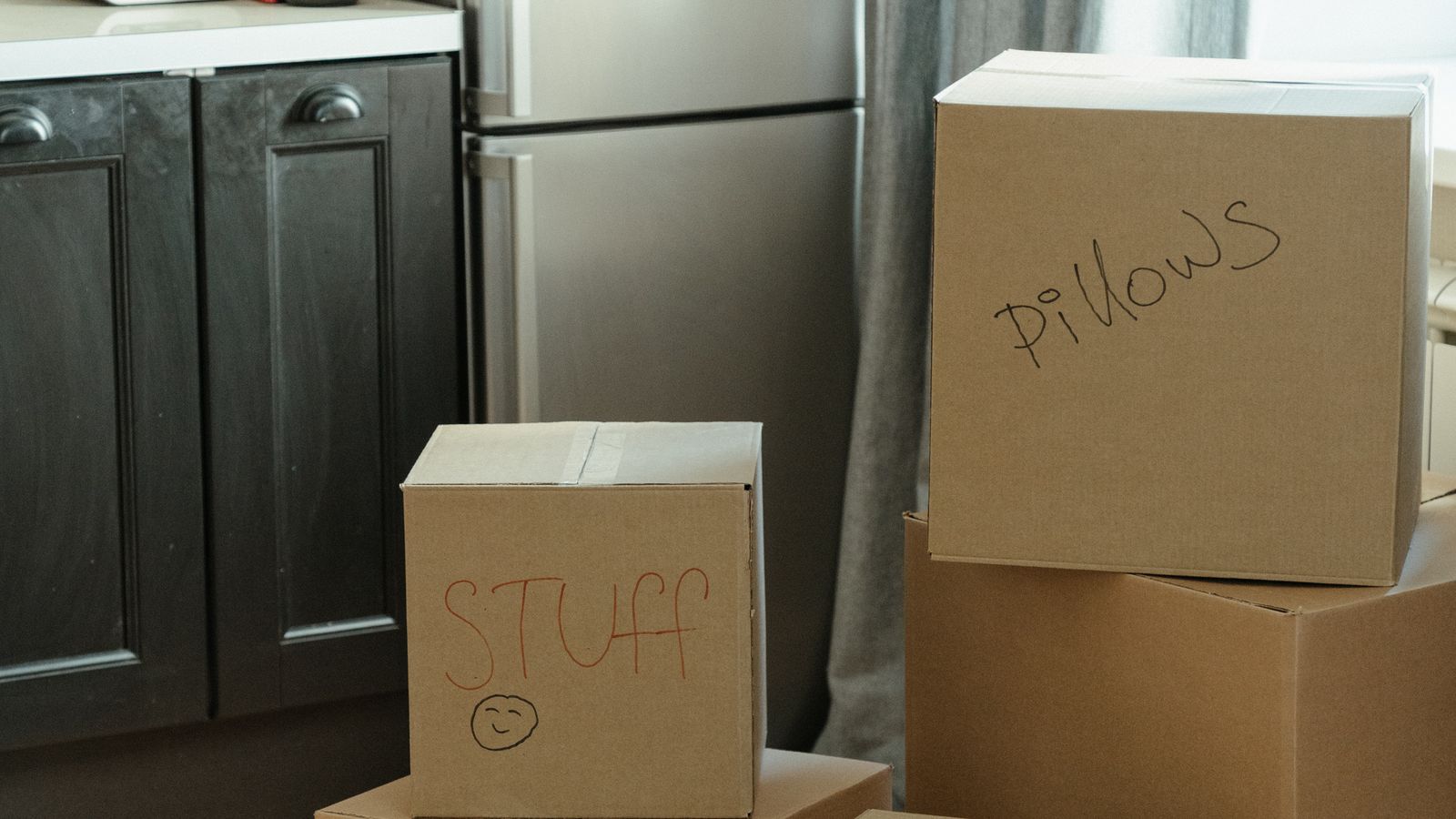
Write the destination room on the box, not the contents. The crew needs to know where it goes, and the word kitchen is more useful to them than a list of pans. Add a short note of what is inside for your own benefit underneath.
Label the sides rather than the top, since boxes get stacked and the top disappears. Mark fragile boxes on every face. And number the boxes per room if you want to know whether anything is missing.
One more thing worth doing: mark the handful of boxes you want opened first with something obvious. Kettle, bedding, toiletries, a change of clothes. Our room-by-room guide to unpacking your new home covers what order to tackle the rest in.
What Does Not Go in the Van
Worth knowing before packing day rather than on it. Removals contracts across the industry exclude a standard list.
- Paint, solvents and cleaning chemicals
- Gas cylinders, including camping gas and patio heater bottles
- Petrol, and anything with fuel still in the tank
- Fireworks and ammunition
- Perishable food
- Pets, which travel with you in the car
- Cash, jewellery, passports and irreplaceable documents, which are better kept with you
Gas appliances are a separate matter again, since gas work in a home has to be done by a Gas Safe registered engineer rather than by a removals crew.

Is a Packing Service Worth Paying For?
It depends on what your time is worth to you and how much of it you have.
Packing an average three-bedroom house properly takes most people the better part of a fortnight of evenings and weekends. A crew doing it as a job will get through the same house in a day, sometimes less, because they are not stopping to look at photographs they found in a drawer.
The people who benefit most are households where time is genuinely short, where somebody is managing a health condition, where there are young children, and where the move is long distance and the fragile items matter.
There is also a quieter benefit. Packing is the largest shared job in a move and the one that most reliably produces friction between people who are already tired. Handing it over removes the argument along with the work.
How EcoGreen Movers Can Help
EcoGreen Movers works as a removal company packing service and full removals provider in one, so the same team handles the packing, the furniture and the move rather than you coordinating separate bookings.
Choose the level that matches how much you want to do yourself. Standard covers loading and unloading. Standard Plus adds dismantling and reassembling all of your furniture. Premium adds professional packing on top, arranged around the rooms and items you want covered. Our packing and storage services page has the detail, and residential moves run UK-wide from London, Manchester and Edinburgh.
Quotes start with a survey, in person or by video. That is where the volume gets assessed properly, where the furniture needing dismantling gets identified, and where you can say plainly which rooms you would like packed. If all you want is boxes, say that too.
We also collect boxes and packing materials from your new home once you have unpacked, so they go back into circulation rather than to landfill. It removes the last visible reminder of the move from the spare room, which people appreciate more than they expect to.
If you want to talk it through, get in touch for a quote and tell us which rooms you would rather not face. There is usually one. Everything else we offer is on the EcoGreen Movers homepage.
Frequently Asked Questions
What is included in a packing service?
It depends on the level you choose. Our Standard package covers loading and unloading, Standard Plus adds dismantling and reassembling all your furniture, and Premium adds professional packing arranged around the rooms and items you want covered. Boxes and materials can also be supplied on their own. Always check what a quote covers before comparing it against another.
Do I have to take packing to get help with furniture?
No. Dismantling and reassembling furniture sits in our Standard Plus package, which does not include packing. Premium is the level that adds packing on top. If you are happy doing your own boxes but would rather not take the bed apart, Standard Plus is the one.
How long does professional packing take?
An average three-bedroom house is usually a day, sometimes less with a larger crew, and it normally happens the day before the move. Doing the same job yourself tends to take a fortnight of evenings, which is the real comparison. How much gets packed depends on what you ask for, since packing is arranged around your requirements rather than fixed.
What size box should heavy items go in?
Small ones, always. Books, tools, tinned food and records all belong in book cartons rather than large boxes. Light bulky things such as bedding, cushions and coats are what large boxes are for.
How should plates be packed?
Wrapped individually and stood on edge like records rather than stacked flat, in a small or double-walled box with plenty of padding underneath. Stacked plates crack under their own weight over a long journey.
Can I leave clothes in the drawers?
Sometimes, and it depends on the firm and the furniture, so ask rather than assume. Hanging clothes are simplest in wardrobe cartons, which take them on their hangers and hand them back the same way at the other end.
What should I label on each box?
The destination room first, written on the sides rather than the top, since tops disappear once boxes are stacked. Add a brief note of the contents for your own use, and mark fragile boxes on every face.
What cannot be packed into the removal van?
Paint, chemicals, gas cylinders, fuel, fireworks and perishable food are excluded as standard across the industry. Pets travel with you, and valuables, documents and medication are better kept in the car than in the load.