
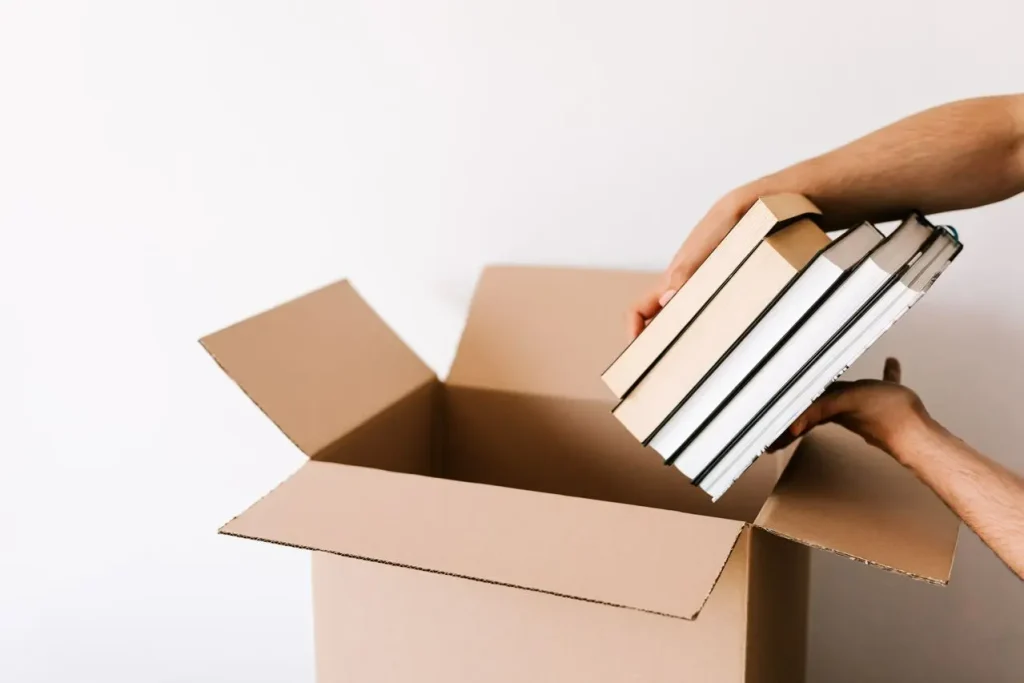
Books are deceptively heavy, and a single overfilled box can injure a mover, split a base, and damage the very collection you’re trying to protect. Whether you’re moving a few shelves of paperbacks or a floor-to-ceiling library of first editions, getting the packing right matters – not just for safety, but for the long-term condition of your books. This guide covers everything: the weight science behind safe boxes, the best way to pack books in boxes for moving, climate and humidity risks during transit, insurance for valuable collections, and specialist guidance for comic books and CGC-graded slabs. If you’re also planning the wider move, the complete house move checklist is a good place to start.
Key takeaways
20–25 lbs (9–11 kg) is the real safe weight limit per book box – not the vague “small box” advice most guides give.
Double-wall corrugated boxes (ideally 12″×12″×12″) are the right choice for book boxes for moving.
Never use newspaper to wrap valuable books or comics – printing ink migrates onto covers and pages.
Comic longboxes must go inside a second, double-wall moving box – a single-wall box will buckle under load.
CGC/CBCS graded slabs should travel in your personal vehicle, not the removal truck.
Declare any collection worth over £500 to your removal company before moving day to ensure insurance coverage.
Silica gel packets and a hygrometer are cheap, effective tools for protecting books and comics in storage.

Before You Pack: Sort, Declutter and Assess Your Books
The best way to pack your books for moving starts before a single box is opened: with an honest sort. Moving is the natural moment to cull – every book you donate, sell, or recycle is a box you don’t have to lift, carry, or unpack.
Work through your shelves in three passes. First, pull anything you genuinely haven’t opened in five years and won’t miss. Second, set aside anything damaged, mouldy, or musty – these shouldn’t travel with healthy books, as mould spores spread in enclosed boxes. Third, identify anything of real value: first editions, signed copies, antique volumes, complete comic runs, or graded slabs.
Photograph valuable books before packing. For any book or collection worth more than a few pounds to replace, take clear photographs of the spine, front cover, back cover, and any notable features (dust jacket condition, signatures, edition markings). Do this before wrapping – once a book is packed, the pre-move condition is undocumented, and that matters if you ever need to make an insurance claim.
Insurance declaration trigger. If your total book and comic collection has a replacement value above £500, you should declare it to your removal company before moving day. Most standard goods-in-transit policies have per-item or aggregate limits that won’t automatically cover a rare collection. See the insurance section below for full guidance.
Charity shops, local libraries, and organisations like Books for Africa welcome donations of good-condition books. Selling via eBay, AbeBooks, or a local second-hand bookshop is worth considering for anything with real value that you no longer want to keep.
Choosing the Right Box for Books
The right packing boxes for books are smaller and sturdier than most people expect. A 12″×12″×12″ double-wall corrugated box is the ideal size for general book packing – it’s large enough to hold a useful quantity, small enough that it won’t exceed a safe carrying weight when full, and the double-wall construction resists the lateral pressure that stacked books create.
Double-wall vs. single-wall corrugated. Single-wall boxes are fine for light items but compress and buckle under the sustained weight of books, especially if stacked in a van. Double-wall boxes have two layers of fluted cardboard between the inner and outer liners, giving them significantly greater stacking strength. For books, always choose double-wall. The same double-wall boxes are the right choice for fragile kitchen items, where the stacking strength matters just as much, and our guide to packing crockery for a move covers the method in full.
Specialist book boxes for moving are available from removal suppliers and online retailers. These are typically pre-sized for books and made from heavier-gauge card. They cost more than standard boxes but are worth it for large collections or anything valuable.
Comic longboxes and shortboxes are purpose-built for comics and are the right internal container for a comic collection. A standard longbox holds approximately 250–300 bagged-and-boarded comics; a shortbox holds around 150. However, comic boxes are not designed as outer moving boxes – they must be placed inside a double-wall corrugated moving box for transit (more on this in the comic section below).
Where to get boxes:
Free boxes: Supermarkets, off-licences, and bookshops often have surplus stock boxes. Banana boxes from supermarkets are particularly robust. Ask in person – most are happy to set boxes aside.
Buying specialist boxes: Removal suppliers, Argos, B&Q, and Amazon all stock book-specific moving boxes. Expect to pay £1.50–£3.00 per double-wall box.
Eco-friendly options: Look for boxes made from recycled corrugated cardboard with water-based inks. Avoid boxes that have been treated with wax or moisture-resistant coatings – these cannot be recycled after your move.
Avoid boxes with carry handles cut into the sides. These holes weaken the structure and, in storage, create entry points for rodents.
The Best Way to Pack Books in Boxes
The best way to pack books for moving combines the right weight discipline, the right orientation, and the right gap-filling – in that order.
The weight rule: 20–25 lbs is the real limit
Most guides say “use a small box” without explaining why. The reason is weight: a standard 12″×12″×12″ box filled entirely with hardback books can easily reach 40–50 lbs, which is unsafe to lift repeatedly and risks splitting the box base. The practical safe limit – the weight at which a loaded box can be safely carried by one person without injury risk – is 20–25 lbs (approximately 9–11 kg).
How to test before sealing: Pack your books, then lift the box a few inches off the ground. If you have to brace your lower back, redistribute. A better test: place the sealed box on bathroom scales. If it reads over 25 lbs, remove books until it doesn’t. This takes an extra minute and prevents injuries on moving day.
Orientation rules
Hardback books: Pack upright (spine down, pages facing up) as they sit on a shelf, or flat in stacks. Upright is preferable for taller hardbacks as it distributes weight evenly across the spine rather than stressing the binding.
Paperbacks: Pack flat, spine down, in neat stacks. Paperback spines are more vulnerable to cracking if stood upright under pressure.
Mixed loads: Place hardbacks at the bottom of the box, paperbacks on top.
Never pack books spine-up or with pages facing down – this stresses the binding and can cause pages to fan and warp.
Layering and gap-filling
Place the heaviest books at the bottom of the box. This lowers the centre of gravity and prevents heavier items from crushing lighter ones. Fill any gaps between books with unprinted packing paper – crumpled loosely, not packed tight. Gaps allow books to shift during transit, which causes corner damage and bent pages.
Do not use newspaper. Printing ink – even modern soy-based inks – can transfer onto book covers, dust jackets, and pages under the heat and pressure of a loaded box. Use plain white packing paper, acid-free tissue for valuable items, or clean, unprinted newsprint (available from removal suppliers). The same paper does a very different job on glassware, where the inside of each item needs filling as well as the outside wrapping, and our guide to packing glasses for moving explains the technique.
Sealing and reinforcing the base
Double-tape the base of every book box before loading. Run two strips of strong packing tape across the bottom seam in a cross pattern, then add a third strip along the full length of the seam. Book boxes are more likely to fail at the base than the sides – reinforcing it takes thirty seconds and prevents a catastrophic drop.
How to Pack Heavy Books for Moving
Packing heavy books for moving safely is about distribution, not just box size. The single most important rule: never put all your heavy books in one box. Split large, heavy volumes – art books, encyclopedias, atlases, legal textbooks – across multiple smaller boxes, mixing in lighter paperbacks to keep each box under 25 lbs.
Specific tactics for heavy book collections:
Use a book trolley or sack truck to move loaded boxes from room to van. Even a well-packed 20 lb box becomes a back injury risk if carried repeatedly up and down stairs.
Mark boxes clearly on the side, not the top. Write “Heavy – Books” on all four sides of the box in large letters. Movers read the side of a box when it’s stacked – a label on the top is invisible once boxes are loaded.
Don’t double-stack heavy book boxes unless the lower box is double-wall and the stack is no more than two high.
Loading position in the van
Book boxes go on the floor of the removal van, in the first layer. They are among the heaviest items in a typical move and provide a stable base for lighter boxes stacked on top. Never place book boxes on top of fragile items, furniture, or appliances. Never stack book boxes more than two high unless the lower boxes are reinforced double-wall.
Books loaded correctly – floor level, against the van wall, with lighter boxes on top – are also less likely to shift during transit, which reduces corner damage and spine stress.
How to Pack Books for Long-Term Storage
Books in storage face risks that don’t exist during a short move: sustained humidity, temperature fluctuation, condensation, and pests. The number one enemy of stored books is moisture, and it most commonly enters from below.
Climate and humidity risks
Concrete floors draw moisture. Even in a dry storage unit, a cardboard box placed directly on concrete will absorb ground moisture through capillary action over days and weeks. This causes the base of the box to soften, the books inside to absorb humidity, and – in warm conditions – mould to develop. Always place book boxes on wooden pallets, timber boards, or plastic shelving to create an air gap between the box and the floor.
Summer heat in vans and storage units is a real risk. A removal van parked in direct sunlight in July can reach 50–60°C internally. At these temperatures, paperback spines soften and warp, dust jacket colours fade, and any moisture in the books accelerates mould growth. If your books will be in a van or container for more than a few hours in warm weather, ensure ventilation and avoid direct sunlight on the vehicle.
Silica gel packets are inexpensive and effective. Place two or three standard 50g silica gel sachets in each book box before sealing for storage. They absorb ambient moisture and significantly reduce the risk of condensation damage. Replace them every 3–6 months in long-term storage.
Other storage precautions
Leave small air gaps between boxes – stacking boxes flush against each other traps humidity and prevents air circulation.
Avoid boxes with cut-out handles for storage – these are rodent entry points.
Do not store books in loft spaces unless the loft is insulated and temperature-controlled. Loft temperatures can swing from -5°C in winter to 50°C+ in summer, which is damaging to both paper and bindings.
Check stored boxes every few months. Open a box, inspect the top and bottom books, and check for any musty smell – the first sign of mould.

How to Pack Comic Books for Moving
Comic books require more careful handling than standard books because their covers are more susceptible to moisture, pressure, and temperature damage, and because condition directly affects value. The correct way to pack comic books for moving starts with bagging and boarding every single issue.
Bag and board first
Every comic should be in a polypropylene bag with an acid-free backing board before it goes anywhere near a moving box. Bags protect against moisture and surface abrasion; boards prevent spine stress and corner bending. If your comics aren’t already bagged and boarded, do this before packing – it’s the single most protective step you can take.
Shortbox vs. longbox
A shortbox holds approximately 150 bagged-and-boarded comics and is easier to carry (typically 25–30 lbs when full). A longbox holds 250–300 and is heavier – a full longbox can reach 40–50 lbs, which is too heavy to carry safely. For moving, shortboxes are strongly preferable. If you only have longboxes, fill them to 60–70% capacity to keep the weight manageable.
Double-boxing for transit
Comic longboxes and shortboxes must go inside a double-wall corrugated moving box for transit. Comic boxes are designed for shelf storage, not for the lateral pressure, stacking loads, and vibration of a removal van. A single-wall moving box placed around a comic box adds almost nothing – use double-wall only.
Do not overfill. Comics should stand upright in their box with light resistance – snug, but not jammed. Overfilling bends spines; underfilling allows comics to lean and crease.
Use cardboard dividers between sections of the box to prevent lateral shifting during transit.
Label every box: “Fragile – Comics – This Side Up” on all four sides and the top.
Humidity and temperature targets
The ideal storage environment for comics is 45–55% relative humidity (RH) and below 20°C. Above 55% RH, paper begins to absorb moisture, causing waviness and foxing. Above 20°C with high humidity, mould can develop within days.
A digital hygrometer – available for under £11 on Amazon – lets you monitor the humidity in your storage space. Place one inside the storage unit or room where comics will be kept and check it regularly. If humidity is consistently above 55%, add silica gel or a small dehumidifier.
Avoid newspaper – ink migration is real
Never use newspaper as packing material around comics or valuable books. Printing ink – including modern inks – migrates under heat and pressure onto adjacent surfaces. A comic wrapped in newspaper and left in a warm van for a few hours can emerge with newsprint transferred onto its cover. Use plain unprinted packing paper or acid-free tissue only.
Post-move unpacking
Unpack comics slowly and check the first and last issues in each box – these take the most pressure during transit and are most likely to show damage. Photograph any damage immediately before moving the comic further, and keep the damaged packaging for any insurance claim.
How to Pack Graded (CGC/CBCS) Comic Slabs
Graded comic slabs – comics encapsulated in hard plastic cases by grading companies such as CGC Comics – require the most careful handling of any item in a typical home move. The cardinal rule: graded slabs should travel in your personal vehicle, not the removal truck.
A removal van subjects its contents to vibration, lateral G-forces on corners, and stacking pressure. A CGC slab that shifts inside a box and impacts another slab can crack the case – and a cracked case means the grade is void, potentially destroying significant value.
Packing individual slabs
Wrap each slab individually in a minimum of 10mm bubble wrap (standard 10mm/large-bubble wrap, not the thin 5mm variety). The wrap should cover all six faces of the slab with at least one full layer.
Stand slabs upright in the box – never lay them flat. Flat slabs stack pressure onto the case and label.
Use foam separators (cut foam sheets or purpose-made slab dividers) between each wrapped slab to prevent case-to-case contact.
Maximum 8–10 slabs per box. Beyond this, the cumulative weight increases the risk of the box base failing and the slabs shifting.
Photograph each slab – front and back – before wrapping. Note the grade, title, and issue number in a written inventory. This is your evidence if a case is cracked in transit.
Transport in your vehicle
Place the slab box on the rear passenger seat or in the boot, braced on both sides with soft items (folded blankets, clothing) to prevent the box from sliding. Do not place slab boxes in the footwell – they can shift under braking.
If you have a large collection of slabs, consider transporting them across multiple car journeys rather than loading them onto the van. The cost of a cracked case – both in repair and in lost grade – far exceeds the inconvenience.
How to Pack Rare, Antique and Valuable Books
Rare and antique books need individual attention that standard packing doesn’t provide. Wrap each valuable book individually in acid-free tissue paper or plain unprinted packing paper before placing it in the box. Acid-free tissue is preferable for anything pre-1900 or of significant monetary value – standard packing paper is slightly acidic and can cause yellowing over time with prolonged contact.
Specific guidance:
Remove dust jackets and wrap them separately in acid-free tissue. Dust jackets are the most fragile and most value-determining part of a collectible book – they crease and tear easily if left on during packing.
Do not use slipcases during transit. Slipcases are designed for shelf storage, not for the vibration and pressure of a moving box. A book in a slipcase inside a moving box can work loose from the case and sustain corner damage.
Minimise light exposure. UV light fades covers and spines. Keep boxes sealed and out of direct sunlight during loading, transit, and unloading.
Pack valuable books in their own dedicated box – don’t mix them with general paperbacks. Label the box “Fragile – Valuable Books – Handle with Care” on all four sides.
Photograph spines and covers before wrapping. For a first edition or signed copy, photograph the title page, copyright page, and any inscription.
Declare valuable books to your removal company before moving day. See the insurance section below.
Insurance and Liability When Moving Books
Most people assume their removal company’s insurance automatically covers everything in the van. It doesn’t – at least not at full replacement value. Understanding what standard removal insurance covers, and where it falls short, is essential before you move a valuable collection.
What standard goods-in-transit insurance covers
A reputable removal company carries goods-in-transit insurance, which covers your belongings against loss or damage caused by the removal company’s negligence during loading, transit, and unloading. It also typically covers accidental damage during the move.
However, standard policies usually have per-item limits and aggregate limits. A policy might cover individual items up to £500 or £1,000, with a total claim cap. A collection of first editions, a full CGC slab collection, or a complete run of key-issue comics could easily exceed these limits.
When to declare a high-value collection
Declare any book or comic collection with a total replacement value above £500 to your removal company before moving day. This is the threshold at which most standard policies begin to fall short. When you declare, ask specifically:
What is the per-item limit under the current policy?
What is the aggregate limit for the whole move?
Does the policy cover books and printed matter at full replacement value?
Is there an option to increase cover for declared high-value items?
The British Association of Removers (BAR) recommends that customers make a detailed inventory of their belongings before moving day and confirm the liability terms in writing with their removal company. Under BAR model terms, if you declare the value of your goods in advance, Standard Liability applies – meaning compensation is based on the reasonable cost to repair or replace the item, accounting for age and condition.
If your collection’s value exceeds what the removal company’s policy covers, consider a specialist fine art and collectibles insurance policy for the duration of the move.
How to document damage for a claim
If books are damaged in transit, your ability to claim depends almost entirely on documentation.
Before packing:
Photograph the condition of every valuable book – spine, covers, pages, dust jacket.
Create a written inventory with title, author, edition, and estimated replacement value.
Keep a copy of any valuations, receipts, or auction records for rare items.
After the move:
Inspect boxes as soon as they are delivered – before the removal crew leaves if possible.
Photograph any damaged boxes before opening them.
Photograph damaged books immediately, before moving them.
Report damage to your removal company in writing within 7 days of the move. Most policies require written notification within this window – verbal reports are not sufficient.
Keep all damaged packaging – it supports the claim that damage occurred in transit rather than before or after.
DIY Packing vs. Professional Packing for Large Book Collections
For a small personal library, DIY packing is straightforward and cost-effective. For a collection of 500 books or more – or any collection containing rare editions, comics, or graded slabs – the calculation changes significantly.
Cost comparison
| Factor | DIY Packing | Professional Packing |
|---|---|---|
| Materials cost (500 books) | £30–£60 (boxes, tape, paper) | Included in service |
| Time required | 6–12 hours | 2–4 hours (crew of 2) |
| Risk of damage | Higher (technique-dependent) | Lower (trained packers) |
| Insurance coverage | Standard policy only | Often enhanced under professional pack |
| Suitable for rare/valuable items | Only with specialist knowledge | Yes, with declared value |
| Cost of professional service | – | £150–£400 for a typical home library |
When professional packing is worth it
Consider professional packing if you have:
More than 1,000 books to move
Rare, antique, or first-edition volumes
A significant comic book collection (100+ longboxes)
CGC or CBCS graded slabs
Limited time before moving day
Any physical limitation that makes heavy lifting risky
A professional packing service includes materials, trained packers who know how to pack books in boxes for moving correctly, and – critically – enhanced insurance coverage that often applies when the removal company has packed the items themselves. If you pack your own boxes and a book is damaged, the company may argue the damage resulted from your packing rather than their handling.
For large collections, the maths often favour professional packing once you factor in materials, your time, and the risk differential. Find out more about our professional packing service.
Eco-Friendly Book Packing Materials
Packing books doesn’t have to mean a pile of single-use plastic. The most eco-friendly approach is also, in most cases, the most practical – cardboard and paper are better for books than plastic anyway.
What to use
Recycled double-wall corrugated cardboard boxes – the standard choice for book boxes for moving. Look for boxes made from at least 70% recycled content. After your move, flatten and recycle them.
Unprinted packing paper – the best gap-filler and wrapping material for books. It’s recyclable, doesn’t transfer ink, and provides good cushioning when crumpled.
Acid-free tissue paper – for valuable and antique books. Compostable and recyclable.
Old towels, clothing, and linens – excellent padding between layers of books and around fragile items. Reusing what you already own produces zero additional waste.
Biodegradable void fill – if you need additional cushioning, look for cornstarch-based packing peanuts or recycled paper void fill rather than polystyrene or plastic bubble wrap.
What to avoid
Plastic bubble wrap – not recyclable in standard kerbside collections, and unnecessary for books when packing paper works as well or better.
Polystyrene packing peanuts – non-recyclable and messy.
Newspaper – as noted above, ink migration is a real risk for valuable books and comics.
At Eco Green Movers, we use recyclable cardboard boxes, unprinted packing paper, and biodegradable void fill as standard. We actively avoid single-use plastics in our packing materials – because a greener move is better for everyone.
Frequently Asked Questions
How many books fit in a standard moving box?
A standard 12″×12″×12″ double-wall book box holds approximately 20–30 average paperbacks or 10–15 standard hardbacks, depending on size. The limiting factor is weight, not volume – stop filling when the box reaches 20–25 lbs (9–11 kg), even if there is space remaining. A box that’s half-full but safely weighted is far better than a full box that injures a mover or splits on the stairs.
Should I pack books flat or upright?
It depends on the type. Hardbacks can be packed upright (spine down, as on a shelf) or flat in stacks – upright is preferable for taller volumes as it distributes weight across the spine rather than stressing the binding. Paperbacks are best packed flat, spine down, in neat stacks. Never pack any book with the spine facing up or the pages facing down, as this puts direct pressure on the binding and causes pages to fan and warp.
Can I use bin bags or suitcases for books?
Bin bags are not suitable for books. They provide no structural support, offer no protection against moisture or impact, and make it impossible to label contents clearly. They also create a significant injury risk – a bag of books has no rigid base and the weight concentrates unpredictably. Suitcases are a reasonable option for a small number of books, particularly for a short move – they’re sturdy, have handles, and can be wheeled. Be cautious about weight: a suitcase full of hardbacks can easily exceed 30 kg, which is unsafe to lift and may damage the suitcase wheels. Use suitcases for lighter paperbacks only, and don’t overfill.
How do I protect rare or antique books during a move?
Wrap each book individually in acid-free tissue paper, remove and separately wrap any dust jackets, and pack valuable books in their own dedicated double-wall box away from general items. Photograph spines, covers, and title pages before packing. Declare the collection to your removal company and confirm insurance coverage in writing before moving day. For very high-value items – first editions, incunabula, signed copies – consider transporting them in your personal vehicle rather than the removal van.
What is the safest way to move a comic book collection?
Bag and board every issue, pack comics upright in shortboxes (not overfilled longboxes), place comic boxes inside double-wall corrugated moving boxes, and label everything “Fragile – Comics – This Side Up.” For CGC or CBCS graded slabs, wrap each slab individually in 10mm bubble wrap, stand upright with foam separators, and transport in your personal vehicle – not the removal truck. Maintain 45–55% relative humidity in storage, monitor with a hygrometer, and never use newspaper as packing material.
Will my removal company’s insurance cover damaged books?
Standard goods-in-transit insurance covers books against damage caused by the removal company’s negligence, but per-item and aggregate limits may not be sufficient for a valuable collection. Declare any collection worth over £500 to your removal company before moving day, confirm the per-item limit in writing, and ask about enhanced cover for declared high-value items. If books are damaged, photograph the damage immediately, keep all damaged packaging, and submit a written claim within 7 days. The British Association of Removers (BAR) recommends confirming liability terms and making a detailed inventory before moving day.