
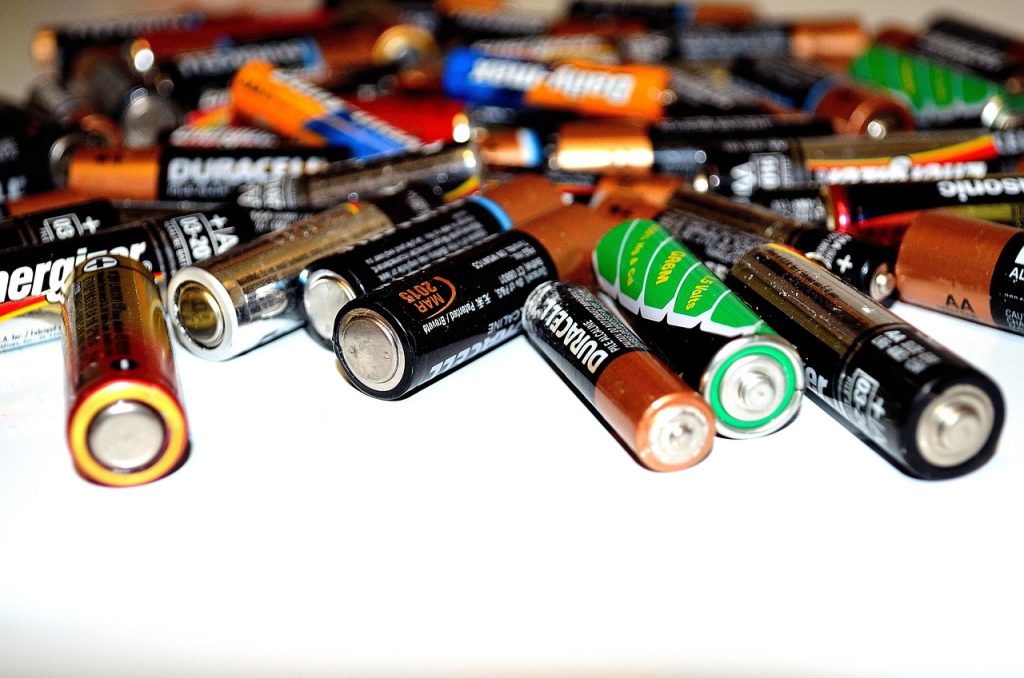
No battery belongs in any household bin, recycling or otherwise. Beyond the heavy metals, lithium cells are a genuine fire risk, and the scale of that risk is larger than most people assume. The good news is that this is one of the easiest disposal jobs going, because a great many shops are legally obliged to take your batteries back for nothing.
Moves surface batteries in quantity. A drawer of loose AAs, an old laptop, cordless drill packs, smoke alarm cells, a toy nobody has touched in three years, and however many vape pens have quietly accumulated. Sorting the lot takes about half an hour and removes a hazard from your bin and from the van.
Summary: Any shop supplying 32kg or more of portable batteries a year must offer free takeback, which covers supermarkets and DIY chains. They must accept any sealed battery an average person can carry, whether or not you bought it there and whether or not they sell that type. Tape lithium and button cell terminals before storing them. Devices with sealed-in batteries go through electrical waste instead. See the GOV.UK guidance on retailer battery takeback.

Where to take them
Retailer takeback covers most households, and the rule is more generous than people realise. The threshold is 32kg of portable batteries supplied per year, which GOV.UK illustrates as roughly one pack of four AA batteries sold per day. Any business above that line must provide a collection point at every premises it supplies from, and that includes shops, chains, and sellers operating online, by mail order or by telephone.
Three details are worth knowing before you go. They must take back any type of sealed battery that an average person can carry without difficulty, not merely the types they happen to stock. You do not need to have bought the batteries there. And you do not need to buy anything on the visit. The bins are usually near the entrance, the tills or the customer service desk.
What retailers are not obliged to take is car and motorbike batteries, or batteries out of industrial equipment. Those are a separate stream handled by garages, scrap metal dealers and recycling centres. Lead-acid batteries hold enough scrap value that some places will take one without charging, and occasionally pay a little for it. Never try to open one, and carry it upright.
Council household waste recycling centres take portable batteries too, normally in a dedicated container, and some authorities collect them at the kerbside if you leave them in a clear bag on top of a bin. That last one varies entirely by area, so check rather than assume.
| Battery type | Where it goes | Preparation |
|---|---|---|
| AA, AAA, C, D, 9V | Supermarket or DIY store collection point | Tape 9V terminals |
| Button and coin cells | Same collection points | Tape individually, keep away from children |
| Rechargeable packs, drills and tools | Collection point or recycling centre | Tape contacts |
| Laptop and phone batteries, if removable | Collection point or recycling centre | Tape contacts, never puncture |
| Devices with built-in batteries | Electrical waste recycling, not the battery bin | Wipe data first |
| Vapes and disposable e-cigarettes | Dedicated vape bins or electrical waste | Never in any household bin |
| Car and leisure batteries | Garage, scrap dealer or recycling centre | Carry upright, do not tip |
| Damaged, swollen or leaking cells | Recycling centre, tell staff on arrival | Isolate in a non-flammable container |
The fire risk, and why taping matters
Battery fires in UK bin lorries and waste sites passed 1,200 in a single year, an increase of 71 percent on the 700 recorded in 2022, with 94 percent of surveyed local authorities calling it a growing challenge. Crushed or damaged lithium cells generate their own oxygen as they burn, so they can keep reigniting and prolong an incident for days. Figures from the National Fire Chiefs Council.
That self-oxygenating property is the detail that makes these fires so awkward. Smothering a normal fire starves it of air. A lithium cell in thermal runaway supplies its own, which is why crews can spend a day or more on a waste fire that started with something small enough to hold in one hand.
A battery in a wheelie bin then meets the compactor on the lorry. That is precisely the crushing force the cells cannot survive, applied inside a vehicle packed with paper and plastic. Vapes have made the problem considerably worse, because every one contains a sealed lithium cell and they are thrown away in enormous numbers.
Taping the terminals prevents the other failure mode entirely. Loose batteries in a drawer or a bag touch one another, and a 9V has both terminals on the same face, so a stray coin or paperclip lying across it completes a circuit on its own. A strip of clear tape over the contacts removes that risk and takes seconds.
Keep collected cells in a rigid container rather than a carrier bag, store it somewhere cool, and do not leave it in a car through a warm afternoon. Anything swollen, leaking or physically damaged wants isolating in something non-flammable, a metal tin with sand or cat litter being the usual advice, and handing to staff at a recycling centre in person rather than posting into a bin unannounced. Never charge a damaged battery, and never put a lithium cell in water.

Devices with batteries you cannot remove
Anything with a sealed-in battery counts as electrical waste rather than battery waste. Phones, tablets, laptops, wireless earbuds, electric toothbrushes, cordless vacuums and vapes all follow the electricals route, where the cell is separated under controlled conditions. Retailers of electrical goods carry their own takeback duties, set out in the GOV.UK guidance on electrical waste responsibilities.
This distinction catches people out constantly, because the hazard is identical but the processing route is not. A battery collection bin is not equipped to handle a whole device, so putting one in creates a problem at the sorting stage rather than solving anything.
Many large stores accept small electricals regardless of where they were bought, recycling centres run a dedicated electricals area, and some councils collect small electricals at the kerbside alongside batteries. The simple test: if you can get the cell out without tools, it is a battery. If you cannot, hand over the whole item as electrical waste.
Wipe anything that held data before it goes. A factory reset on a phone or tablet, and a proper wipe or a removed drive on a laptop. This is the step that genuinely matters and the one most often skipped mid-move, when devices get boxed in a hurry and dealt with at some vague later date that never quite arrives.
Working devices should be sold, donated or passed on rather than recycled. A three-year-old tablet is worth something real to somebody, and reuse beats recycling on every measure going. Route it to electrical waste only once it is genuinely finished.
What happens to them after collection
Collected batteries are sorted by chemistry and processed to recover the metals inside. Compliance schemes collect from retailer collection points free of charge, and anyone transporting batteries themselves needs a waste carrier registration and must follow the hazardous waste rules, as set out in the GOV.UK battery takeback guidance.
Lead-acid car batteries are the clearest case. Lead, acid and the plastic casing are all recoverable, and the recovered lead has enough value to make collection worth a scrap dealer’s while, which is why they will often take one off you without a fee.
Portable cells are more mixed. Alkalines yield steel, zinc and manganese. Lithium cells hold cobalt, nickel and lithium that are well worth recovering but considerably harder to separate, and processing capacity for them has been expanding alongside electric vehicle volumes.
The practical implication is that this is a recycling route worth trusting, which is not true of every material a household clears out. Sorting your batteries properly leads to genuine material recovery rather than energy recovery, so the half hour is not wasted.
Doing it as part of a move
Batteries hide in predictable places. Knowing the six saves you discovering them one drawer at a time on packing day.
| Location | What turns up | Why it is missed |
|---|---|---|
| Kitchen drawer | Loose AA and AAA, mixed used and unused | Nobody knows which are dead |
| Under the stairs or utility | Tool packs, torch cells, old chargers | Packed last, sorted never |
| Garage or shed | Car battery, leisure battery, garden tool packs | Assumed to be someone else’s problem |
| Smoke and carbon monoxide alarms | 9V cells, sometimes sealed ten-year units | Removed on the day and pocketed |
| Children’s toys | Button cells, AA packs | Still inside the toy being donated |
| Old phones and laptops | Sealed lithium cells | Kept in a drawer indefinitely |
Two things fall out of that worth acting on. Batteries left inside donated toys and appliances are a persistent headache for charity shops, which end up carrying the disposal cost themselves. Check the battery compartment of everything leaving the house.
The mixed drawer of unknown cells is where most people give up. A cheap tester settles it in minutes, and a surprising share of a typical drawer turns out to be perfectly usable. Sort into good and dead, keep the good ones in a labelled box, and drop the rest at a collection point on your next shop.
Do this a fortnight ahead rather than on the day. Damaged batteries, car batteries and fuels cannot lawfully travel in a removals van, so anything questionable needs sorting before the crew arrives.
Reducing how many you generate
Rechargeable cells replace many disposables over their working life and have improved considerably. For anything used regularly, a set of rechargeables and a charger removes most of the drawer problem permanently and reduces how often you are handling batteries at all.
The devices that eat batteries fastest in a typical house are children’s toys, remote controls, wireless mice and keyboards, and wall clocks. Those are exactly the applications rechargeables suit, since the cells are accessible and the discharge is predictable.
Disposables still make sense in smoke alarms and anything safety-critical, where a slow steady discharge and a long shelf life matter more than running cost. Sealed ten-year alarms sidestep the decision altogether and are worth fitting when you move into a new place.
A move is the natural moment to switch, because you are handling everything anyway and can finally see how many battery-powered devices you actually own. Buy the rechargeables for the new house rather than transporting a drawer of half-dead alkalines to it.
One last check on anything you are donating, selling or leaving behind. Cells left sitting in an unused device for years leak and eat the contacts, which turns a working item into somebody else’s waste.
When the bin genuinely is not an option
There is no household battery that belongs in a bin. Unlike paint or foam, where general waste is occasionally the honest answer, batteries have a free, legally mandated takeback route in a very large number of shops, and no circumstance in which binning them is the correct call.
That is worth saying plainly, because so much recycling guidance closes with a pragmatic fallback. This one has none. The infrastructure exists, it costs nothing, and it sits in places you already visit weekly.
The genuine complication is quantity. Clearing a house or a workshop can produce a volume no supermarket collection bin was designed for, and arriving with a sackful is unfair on the store. A recycling centre is the right destination then. Anything arising from a business is different again: commercial waste falls under the wider duty of care in the Defra waste duty of care code of practice, which brings registered carriers and waste documentation into play in a way household disposal does not.
The other complication is moving damaged cells. A swollen lithium battery is a hazard inside a car, so isolate it properly, keep the journey short, and speak to site staff on arrival rather than putting it in a container yourself.
For the rest of the garage, our guide on disposing of paint when moving out covers the hazardous items that tend to surface alongside batteries.
How EcoGreen Movers handles hazardous items
Removals firms cannot lawfully carry damaged batteries, fuels, gas canisters or solvents. EcoGreen Movers raises this at the quoting stage rather than on the morning, so nothing turns up in a garage with the van already half loaded.
We run residential moves across the UK, including London, Manchester and Edinburgh, with a low-waste approach that applies to what leaves the property as much as what arrives. Devices with batteries still in them are worth flagging whichever level you book, whether that is Standard for the loading and unloading, Standard Plus with furniture taken apart and rebuilt, or Premium where we do the packing and can set them aside as we go. Boxes are available on their own, storage runs alongside the move, and our disposal and clearance service covers the wider clear-out that usually turns up the battery drawer in the first place. Get in touch for a quote.
Frequently asked questions
Can batteries go in the recycling bin?
No, and it is among the most dangerous recycling mistakes a household can make. Compaction in a collection vehicle crushes lithium cells and starts fires, of which the National Fire Chiefs Council recorded more than 1,200 in UK bin lorries and waste sites in a single year. Use a dedicated collection point instead.
Which shops have to take batteries back?
Any business supplying 32kg or more of portable batteries a year, which GOV.UK equates to about one pack of four AA batteries a day. In practice that means supermarkets, DIY chains and many electrical retailers. They must provide a collection point at every premises they supply from, including online and mail order sellers.
Do I have to have bought them there?
No. Obliged retailers must accept any sealed battery an average person can carry without difficulty, regardless of where it came from and whether they sell that type at all. You do not need to buy anything on the visit. Car, motorbike and industrial batteries are the exception and go elsewhere.
Why tape the terminals?
To stop them short-circuiting against each other or against metal objects in storage or transit. It matters most for 9V batteries, which carry both terminals on one face, and for button and lithium cells. Clear tape over the contacts is the whole job.
What do I do with a swollen battery?
Isolate it in a non-flammable container such as a metal tin with sand or cat litter, keep it clear of heat and anything combustible, do not charge it, and take it to a recycling centre telling staff on arrival. Do not drop it into a collection bin unannounced.
In summary: tape them, box them, drop them on the next shop
Gather every battery in the house into one rigid container, tape the terminals of anything lithium, 9V or button-shaped, and take the lot to a supermarket or DIY store collection point. It is free, it needs no special trip, and no household battery belongs in a bin.
Sealed-in batteries travel as electrical waste instead, wiped of data first. Do it a fortnight before the move, because anything damaged cannot go in the van.