
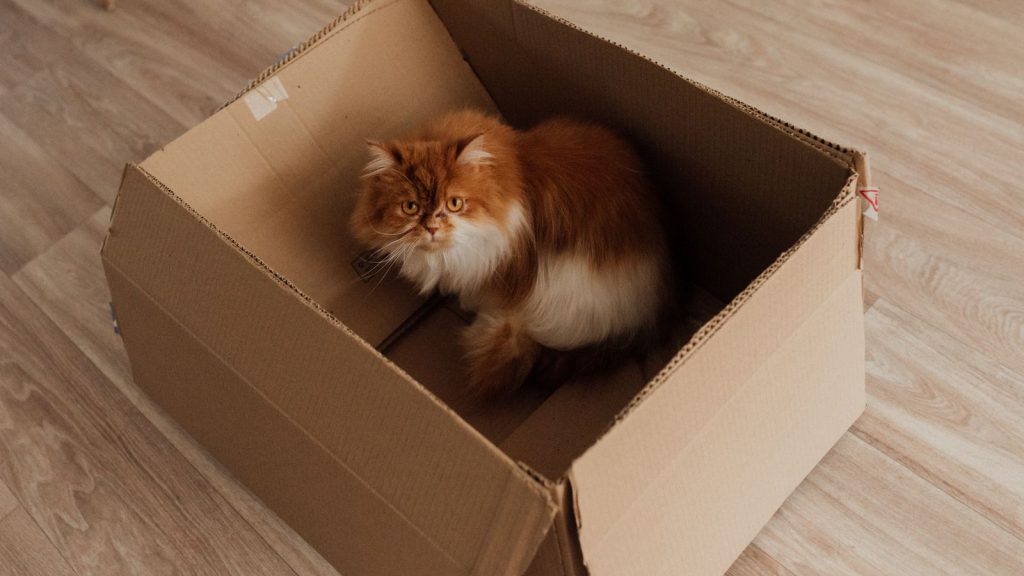
Most advice about moving with animals assumes you have a cat or a dog. Plenty of households have neither, and are instead wondering how to move a rabbit who panics at car journeys, a tank containing four fish and a great deal of water, or a parrot with strong opinions about change.
This guide covers the full range. Cats and dogs get a summary each, because there is a detailed article on this site for both, and the space is better spent on the animals nobody writes about. Rabbits, guinea pigs, fish, birds and reptiles all have specific requirements, and getting them wrong causes genuine harm rather than mild inconvenience.
One thing applies to every species in this article: the animal does not know what is happening. It sees furniture leaving, hears unfamiliar voices, and eventually finds itself somewhere that smells wrong. Everything below is essentially about reducing how much of that they have to absorb at once.

The Rule That Applies to Every Animal You Own
Whatever the species, three things hold true, and they are worth stating before the individual sections.
Pets travel with you, not in the removals van. This is not a preference. A loaded vehicle is dark, noisy, unventilated in the way an animal needs, and legally not a place for a living creature. Every pet in the household goes in a car, in a carrier, with a person.
The animal is the last thing out and the first thing settled. Load the van, clear the house, then collect the pet from wherever it has been kept safe. At the other end, set up their space before anything else gets unpacked.
Do not clean everything. The single most common mistake across all species is washing bedding, scrubbing hutches and replacing tank decorations so the animal arrives somewhere spotless. Familiar smell is the main thing an animal has to orient itself with in a strange building, and washing it away removes the one comfort available. A dirty blanket is doing a job.
Cats: The Short Version
Cats are territorial rather than attached to people, which is why they take a move harder than dogs and why they sometimes attempt to return to the old address.
The essentials: get the carrier out weeks early and leave it open with a blanket inside, so it stops being a signal that something unpleasant is imminent. On the day, shut the cat in one empty room with a sign on the door before any packing starts, or book them into a cattery. At the new house, reverse it: one room, door closed, litter tray, food, water and something that smells of the old place, and leave them there for several days while the rest of the house gets sorted.
Keep cats indoors for at least a fortnight afterwards, and longer where the cat is nervous or the roads are busy. For the full detail, including the timeline for letting them outside and why the butter-on-the-paws advice is nonsense, see our week-by-week settling plan for cats.
Dogs: The Short Version
Dogs generally cope better, because their attachment is to the household rather than the building. They will still pick up on weeks of disruption and may become clingy, restless or unsettled in their toileting.
The essentials: keep walks and feeding at their usual times even when nothing else in the house is normal. Arrange for the dog to be elsewhere on the day, because open doors and a stream of strangers is how dogs get out. Travel restrained, either in a crate or with a harness attached to a seatbelt.
At the new house, walk the garden boundary before letting them loose in it, checking for gaps a determined dog could use. Our guide to moving with cats and dogs covers transport, anxiety signs and settling in more depth.
Rabbits and Guinea Pigs
These are prey animals, and that single fact explains almost everything about how they respond to a move. A prey animal’s instinct under threat is to freeze and hide rather than to protest, which means a rabbit in serious distress can look calm to anyone who does not know what to watch for.
Rabbits are also physiologically fragile in a way cats and dogs are not. Prolonged stress can cause them to stop eating, and a rabbit that stops eating develops gut problems quickly. This is the reason rabbit owners are told to monitor appetite closely after any upheaval: it is the earliest reliable warning sign.
Before the day
Rabbits and guinea pigs living in pairs or groups should travel together. Separating bonded animals for a journey and reintroducing them afterwards can break the bond, which is a considerably bigger problem than the move itself.
Get them used to the travel carrier in advance, with familiar bedding inside and treats left there, so it is a known object rather than a new one arriving on a bad day.
The journey
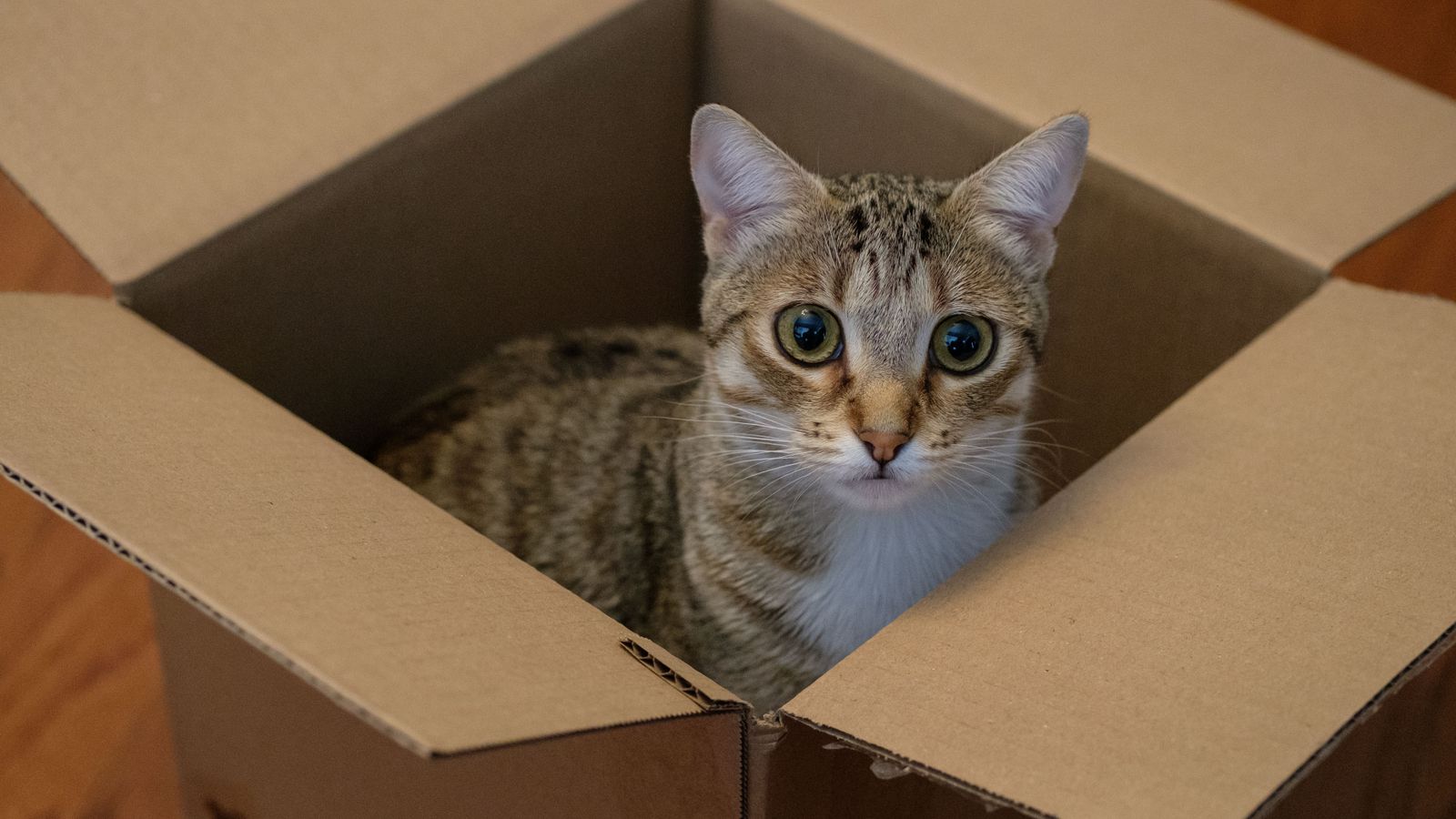
Use a solid carrier with good ventilation rather than a cardboard box, which a rabbit can chew through and which collapses if it gets wet. Line it with the bedding they have been using, unwashed.
Provide something with high water content, such as their usual leafy greens, since these animals do not reliably drink from a bottle in a moving vehicle. Keep the carrier out of direct sun and keep the car cool. Small animals overheat far more easily than people expect, and a warm car is a genuine risk rather than a comfort issue.
At the other end
Set the hutch or cage up before bringing them in, in a quiet room away from the unpacking. Use the same bedding, the same layout and the same food. Check they are eating and producing droppings within the first day, and speak to a vet promptly if either stops.
For outdoor hutches, position matters more than convenience. Sheltered from wind and rain, out of direct afternoon sun, and secure against foxes, which are present in most UK gardens including urban ones. A hutch that was safe at the old address is not automatically safe at the new one.
Fish and Aquariums
Fish are the hardest pets to move and the ones most often underestimated. The difficulty is not the fish. It is that an established aquarium is a working biological system, and moving it means dismantling that system and rebuilding it.
The filter is the part that matters. A mature filter holds the bacteria that process fish waste, and those bacteria die within hours if the media dries out or loses oxygen. Lose them and the tank goes through a cycle that can kill the fish over the following weeks, which is why fish sometimes die a fortnight after a move that appeared to go perfectly.
The order of operations
Stop feeding a day or two beforehand. Fish cope with a short fast without difficulty, and less food means less waste during transit.
Catch the fish and move them into containers of their own tank water, not fresh water. Buckets with lids or purpose-made transport bags both work. Do not overcrowd them, and keep them dark and covered, which reduces stress considerably.
Save as much of the existing tank water as you practically can, in sealed containers. Keep the filter media permanently wet in that same water for the whole journey. This is the single most important step in the entire process.
Only then drain the tank completely. A glass aquarium must never be moved with water or substrate still in it, because the weight flexes the base and the seams fail, sometimes not immediately but weeks later. Empty means empty.
Setting up again
The tank goes up as a priority at the new address, not once everything else is done. Substrate back in, saved water back in, topped up with fresh water treated with a dechlorinator, filter running with its original media, heater on.
Let the temperature stabilise before reintroducing the fish, and float their containers so the temperatures equalise gradually rather than putting them straight in. Then test the water over the following fortnight, because even a well-handled move disturbs the balance, and feed lightly until readings settle.
For a large or long-established tank, particularly a marine setup, it is worth asking a specialist aquatics shop what they advise. Some will board fish temporarily, which for a complicated system is often the sensible answer.

Birds
Birds are sensitive to two things a move produces in quantity: sudden changes in temperature, and airborne substances.
The respiratory point is worth taking seriously. Birds have unusually efficient respiratory systems, which means anything in the air affects them faster and more severely than it affects people. Fresh paint, cleaning products, aerosols and dust from a house being emptied are all relevant. Keep birds well away from any room being decorated, and ventilate the new house before they arrive.
For the journey, a smaller travel cage is safer than the main one, because there is less distance to be thrown around in. Remove swings, mirrors and anything hanging that could swing into the bird. Keep perches low. Cover the cage partially, which calms most birds, while leaving airflow.
At the new house, put the cage where you intend it to live rather than moving it repeatedly over the first week, and site it against a wall rather than in the middle of a room. Birds settle faster with something solid behind them. Expect a quiet few days: a parrot that stops talking after a move is usually processing rather than ill, though appetite is worth watching.
Reptiles and Amphibians
The animal is usually the easy part. The equipment is the problem.
Reptiles depend on their environment for body temperature, so the priority is keeping them warm enough in transit and restoring the correct conditions quickly. A polystyrene box or an insulated cool box, used in reverse, holds heat well. Heat packs designed for animal transport can help on a cold day, wrapped so there is no direct contact and so the animal can move away from the warmth.
Move them in a secure, ventilated container rather than the vivarium itself. Glass vivariums are heavy, fragile and full of loose substrate and hides that will slide about.
At the new address the vivarium goes up first, with heating and lighting running and temperatures verified before the animal goes back in. Photograph the setup before dismantling it, which makes rebuilding it accurately much faster, and be aware that thermostats and timers need checking rather than assuming they survived the journey.
Expect a reptile to go off food for a while afterwards. That is normal. Prolonged refusal, or a snake refusing food alongside other changes, is worth a call to an exotics vet, and it is worth identifying one near the new address in advance because not every practice sees reptiles.
The Legal Bit: Microchips and Registered Addresses
This is the most commonly missed job in a pet move, and it is a legal obligation rather than good practice.
Dogs across the UK must be microchipped and registered on an approved database. Cats in England must be microchipped by 20 weeks old under regulations that came into force in June 2024. In both cases the keeper is required to keep the registered details up to date, which explicitly includes a change of address. Details that are out of date mean the animal is not properly microchipped in law, and enforcement can follow, with fines of up to £500.
Beyond the legal position, this is the practical point that matters most in this entire article. The period right after a move is when animals are most likely to go missing, and it is exactly when an out-of-date chip record does the most damage. A cat found three streets from your new house is scanned, and the database returns an address you left a fortnight ago.
Update the database before you move, not after. It takes minutes online with your chip number, and some databases charge a small fee. While you are at it, remember that dogs in a public place are separately required to wear a collar with the owner’s name and address on it, so the tag needs replacing too.
Also worth doing at the same time: register with a vet near the new address and request your animal’s history be transferred, update your address with your pet insurer, and order repeat medication early rather than discovering a gap.
Multi-Pet Households
Where several animals are involved, the mistake is treating them as one job. They need different things at the same time, and one person cannot do all of it while also moving house.
Decide in advance who is responsible for which animal, and write it down. On a day when the front door is open for hours, an animal everyone assumed somebody else was watching is how pets get out.
Keep species separated in transit even where they live together happily. A stressed animal behaves differently, and a car is a confined space with no escape route. Separate carriers, ideally out of sight of each other.
Reintroduce them at the new house gradually rather than opening everything at once, and expect some friction in the first week even between animals that have lived together for years. They are all recalibrating at the same time.
How EcoGreen Movers Works Around Animals
Crews cannot transport animals, and no reputable firm will offer to. What we can do is work in a way that makes the day less disruptive for them.
Tell us at survey stage what you have and where it will be. A room that needs to stay shut until last, a tank that needs the mains left on, a hutch in the garden that should not be walked past repeatedly. Knowing means the load is planned around it rather than the crew discovering a closed door and improvising.
Aquariums, vivariums and large cages are also worth flagging specifically. They are heavy, awkward and fragile, and they need to travel empty and be positioned first at the other end rather than last. That changes the loading order, which is easier to plan than to fix.
Our packing services also help here, simply by shortening the disruption. A house packed over two days rather than three weeks gives an animal far less to worry about, which is the case for Premium in a household with pets. Standard Plus covers the furniture coming apart, Standard covers the loading and unloading, and boxes are available on their own if you would rather pack around the animals at your own pace. Storage bridges the gap where a new place is not ready. See the full range on the EcoGreen Movers homepage or ask for a quote, and mention the animals when you do.
Frequently Asked Questions
Can any pet travel in the removals van?
No, and this applies to every species without exception. A loaded van is dark, noisy and not ventilated in the way a living animal needs, and removals contracts exclude animals entirely. Every pet travels in a car with a person, in a secure carrier.
Do I legally have to update my pet’s microchip when I move?
Yes for dogs anywhere in the UK, and for cats in England. The keeper must keep the registered details current on an approved database, and a change of address counts. Out-of-date details can attract enforcement and a fine of up to £500, and they are also the reason plenty of lost pets are never returned.
How do I move a fish tank without killing the fish?
Keep the filter media wet in original tank water for the entire journey, because the bacteria living in it are what keep the tank safe. Move the fish separately in their own water, drain the tank completely before lifting it, and set it up as a priority at the new address rather than last.
Should I wash my pet’s bedding before the move?
No. Familiar scent is the main thing helping an animal orient itself somewhere unfamiliar, and washing it removes exactly that. Take the bedding as it is, put it in the same arrangement at the other end, and wash it once they have settled.
My rabbit has stopped eating since the move. Is that serious?
Take it seriously and ring a vet rather than waiting to see. Rabbits that stop eating can develop gut problems quickly, and appetite is the clearest early signal that a rabbit is not coping. Prey animals hide distress well, so a rabbit sitting quietly is not necessarily a rabbit that is fine.
How long before a pet settles into a new home?
Days to a few weeks for most animals, though cats commonly take longest and small animals often show it least. Keeping feeding times, layout and bedding consistent speeds it up more than anything else. Appetite returning to normal is usually the best sign that things are settling.
Should I book my pet into a cattery or kennel for moving day?
Where it is practical, yes, particularly for cats and dogs. It removes the risk of an animal escaping through a door that is open all day, and it means they arrive to a house that is already quiet. Book early, because the popular end-of-month dates fill up.