
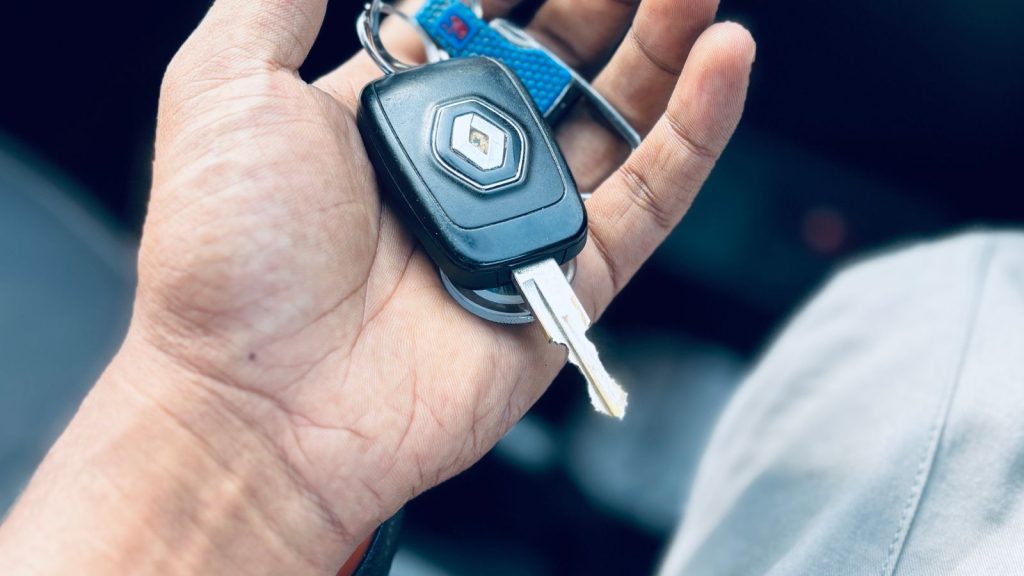
Two minutes. That is the whole job. It costs nothing, and the Driver and Vehicle Licensing Agency (DVLA) record changes the instant you hit submit, with a fresh logbook following in the post a few days later.
Skip it and you have committed an offence carrying a fine of up to £1,000. There is no grace period on this one, which sets it apart from almost everything else on the moving list.
The thing that catches people is that this is a completely separate job from updating your driving licence. Two DVLA records. Two notifications. Two potential fines. Doing one and assuming the other followed is the most common oversight after a house move, and it is exactly why speeding notices and tax reminders keep arriving at addresses people left years ago.
Summary: Change your vehicle log book (V5C) address free at GOV.UK using your vehicle registration number, the log book reference number and a UK address. The record updates in real time. If your car is leased or on finance, the leasing company is the registered keeper and you tell them instead. Full guidance on GOV.UK.

Tax your vehicle first if it is due within four weeks
GOV.UK instructs you to check whether your vehicle needs taxing in the next four weeks before you change the address. If it does, tax it online using your current V5C first, then update the address. See the GOV.UK before you start list.
Almost nobody mentions this, and it is the sequencing detail most likely to cause you an actual problem. Changing the address retires your current logbook and its reference number. Tax the car afterwards, before the replacement arrives, and you may find yourself holding a document the system no longer recognises.
So the order runs: check the tax expiry, tax it if it falls inside four weeks, then change the address. Thirty seconds of checking saves a fortnight of irritation.
Online against postal: the two routes compared
The online service runs Monday to Friday 7am to 9pm, and 7am to 8pm at weekends. You need the vehicle registration number, your log book reference number and a UK address. Both routes are free. Hours and requirements are published on GOV.UK.
| Route | What you need | Cost |
|---|---|---|
| GOV.UK online service | Registration, log book reference number, UK address | Free |
| Post, new-style logbook | Section 3 completed, whole document posted | Free |
| Post, old-style logbook | Section 6 completed, whole document posted | Free |
| Logbook lost or never received | Apply for a replacement log book first | Fee applies |
| Leased or financed vehicle | Notify the leasing or finance company | Free, usually |
Some perspective on why the online route exists at all. When DVLA launched it, the agency was receiving around 1.4 million paper change-of-address applications on vehicle records every year, roughly four to six thousand a day, each one physically opened and keyed by hand. Every one of those took up to six weeks. The online version does it in real time. DVLA set out the numbers in its own launch post for the service.
Unless your logbook is missing or your circumstances are genuinely unusual, there is no argument for the post.
Who cannot use the online service
GOV.UK excludes several situations: changing your name at the same time, having already posted your log book, having lost it, a vehicle on the DVLA fleet scheme, and any new address outside the UK, including the Channel Islands, the Isle of Man and Ireland. GOV.UK lists the exclusions in full.
The overseas exclusion surprises people who assume the Isle of Man or Jersey counts as domestic for this purpose. It does not, and neither does Ireland.
Name and address together is the other common blocker. Marriage plus a house move in the same summer is not a rare combination, and that pairing forces you onto the postal route with proof of the name change enclosed.
What the logbook actually proves, and what it does not
The V5C names the registered keeper, meaning whoever is responsible for taxing the vehicle and keeping its details current. It is not proof of ownership. A car can be owned by one person and registered to another, and DVLA takes no view on who paid for it.
That distinction matters more than most drivers realise, because the registered keeper receives everything. Tax reminders on form V11. MOT reminders. Safety recall notices. Notices of Intended Prosecution. Congestion and clean air zone charges. Private parking claims.
All of it goes to the address on the V5C and nowhere else. No forwarding. No cross-check against your driving licence. No second attempt. A Royal Mail redirection catches ordinary post but should never be treated as a substitute, because redirection expires and the legal duty does not.
The document also records make, model, registration, engine size, colour, fuel type and the 17-character vehicle identification number (VIN). None of that changes when you move. Only the keeper address needs touching.
Finding the log book reference number
The document reference number is an 11-digit code printed in a box on the front of the V5C. It is not the registration number and not the VIN. DVLA’s own service specifies the 11-digit reference from the latest V5C.
Note that word: latest. The reference identifies the document, not the vehicle, which is why it changes every single time DVLA issues you a new logbook. That old V5C you dug out of the kitchen drawer may well carry a number that stopped working years ago.
If the service rejects your number, that is almost always the reason. A newer V5C has been issued since, usually because the vehicle changed hands or a previous address change went through. The postal route or a replacement application is the way forward.
Have the logbook physically in front of you before you begin. The service will not let you save halfway and come back, and hunting through paperwork with a half-finished form open is precisely how this job gets abandoned for another six months.

Doing it by post without losing the document
Write the new address in section 3 on a current-style logbook, or section 6 on an older one, then send the whole document to DVLA. Do not use a PO Box address, and on the older form do not tick the new keeper box or fill in your name. GOV.UK sets out both formats.
The postal address for logbooks is DVLA, Swansea, SA99 1BA. Note that this differs from the postcode used for driving licence applications by two letters, which is a small detail with a multi-week consequence when it goes wrong.
- Never tick the new keeper section. That tells DVLA you have sold the car and transfers it away from you. Unpicking that is far harder than the address change was.
- No PO Box addresses. The keeper address has to be a physical UK address.
- Use a tracked service. You are posting your only copy of a legal document. Lose it untracked and you are paying for a replacement.
- Photograph every page first, reference number included, before it goes in the envelope.
- Send nothing else. Extra enclosures slow processing, and DVLA asks for proof only when changing a name.
You can carry on driving throughout. There is no requirement to keep the V5C in the vehicle, so its absence while DVLA processes the change creates no problem at all.
When the leasing company is the keeper, not you
GOV.UK requires you to be the vehicle’s registered keeper to use the service. On lease, contract hire or salary sacrifice the finance company holds that role and the V5C, so you notify them and they update DVLA. GOV.UK states the keeper requirement.
This is the biggest gap in most guidance on the subject, and it affects a large share of newer cars on UK roads. Someone driving a leased or salary-sacrifice vehicle goes looking for how to change their logbook address and finds page after page of instructions for a document they have never once held.
The line runs along ownership rather than payment method. On a personal contract purchase you are usually the registered keeper and hold the V5C, even though the finance company retains an interest until the final payment. On contract hire and leasing, the funder is the keeper. If you have a V5C in the house, check the keeper section: your name there means the job is yours.
Company cars work the same way. Registered to your employer means the fleet department handles it. Tell them promptly regardless, because penalty notices routed to a company address that names you as the driver reach your desk eventually, usually with a fleet manager attached to them.
Vehicle tax, private plates and insurance
GOV.UK lists three companion updates alongside the logbook: your driving licence, your vehicle tax Direct Debit if that is how you pay, and your certificate of entitlement (V750) or retention document (V778) if you hold a private registration. All three appear on the same GOV.UK page.
A private registration already assigned to your car is covered by the V5C update. One held on retention is not, and that catches people who bought a plate and have not yet put it on a vehicle. The retention certificate carries its own address record, and letting it drift means losing sight of a renewal notice for an asset worth several hundred or several thousand pounds.
Insurance is the change with the sharpest financial edge. Insurers price heavily on the postcode where a vehicle sleeps, and they expect the keeper address, the policy address and the licence address to agree with one another. A mismatch reads as material non-disclosure, which at claim stage means a proportionate reduction or, in serious cases, a voided policy. Ring them in the same sitting, and while you are at it check what your home insurance covers during a move.
Northern Ireland runs a separate system through the Driver and Vehicle Agency (DVA) rather than DVLA, with its own forms and timings.
Comparing the two DVLA records side by side
We set the published requirements for both DVLA address records against each other, because the differences are exactly what cause people to complete one and abandon the other halfway through.
| Point of difference | Vehicle logbook | Driving licence |
|---|---|---|
| What you need | Registration and log book reference | Your licence, plus a GOV.UK sign-in |
| Identity check | None beyond the reference number | May require photo ID |
| Record updated | In real time | On processing |
| New document | Posted to you | Posted to you, within a week online |
| Postal address | DVLA, Swansea, SA99 1BA | DVLA, Swansea, SA99 1BN |
| Do you keep the document? | Yes, DVLA posts a replacement | No if applying by post |
Two conclusions came out of it. The logbook is genuinely the easier of the two and should be done first, because it needs one number rather than an identity check and it protects you immediately. And those postal addresses differ by two letters, which is a very small mistake with a very long tail.
The licence side is covered in full in our guide to the driving licence change of address, including when in the move to submit it.
When not to submit it yet
Hold off in three situations: you have not taken occupancy, you are about to sell the vehicle, or you are moving into short-term accommodation for a matter of weeks.
Most guidance says do this before or on moving day. That advice sits awkwardly with the fact that DVLA posts a legal document to whatever address you type. On or immediately after the day you take occupancy is the sensible window, and doing it the same evening as the licence keeps both in one sitting.
Selling the car within a few weeks? The address change still needs doing, because you remain the keeper and liable until the sale is notified. Do the address change first and complete the transfer afterwards. Never both on the same document, or the two processes collide.
No vehicle at all? None of this applies. Only the driving licence record needs updating, even if you hold nothing more than a provisional. Our complete moving house checklist covers the rest of the notification sequence, and telling the council about a move is the other item with a hard financial deadline.
How EcoGreen Movers fits into moving day
Two minutes of DVLA admin is easy to fit in when the rest of the day is under control. EcoGreen Movers is a nationwide UK removals company quoting on a fixed basis and using reusable crates rather than disposable cardboard, so the evening of the move goes on finding the kettle rather than flattening boxes.
We run residential moves across the country, with teams for house moves in London, removals in Manchester and removals in Edinburgh. Get in touch for a quote once you have a date.
Frequently asked questions
Is there a fee for changing the address?
No. GOV.UK describes the update as usually free by either route. A cost only arises if the logbook is lost or was never received and you need a replacement. Any site charging to process the change itself is a third-party service, not DVLA.
What happens if the address is never updated?
GOV.UK states you can be fined up to £1,000. The practical damage usually arrives first: missed tax and MOT reminders, unseen penalty notices escalating to court, and an insurer questioning cover because the keeper postcode does not match the policy.
Do I update the logbook if my car is leased?
No. On a lease, contract hire or salary sacrifice arrangement the finance company is the registered keeper and holds the document. Notify them and they update DVLA. On a personal contract purchase you are usually the keeper and the job is yours.
Should I tax the car before or after changing the address?
Before, if tax falls due within the next four weeks. GOV.UK asks you to check this before you start and to tax the vehicle online using your current V5C first, because the address change retires the document you are holding.
Does my vehicle tax Direct Debit need changing?
You do need to tell DVLA, but not your bank. GOV.UK lists the Direct Debit as a separate update alongside the logbook. Check the first collection after the move as a precaution, since a failed payment is what turns into an untaxed vehicle penalty.
In summary: one number, two minutes, no grace period
Check whether tax is due inside four weeks. Find the reference number on the front of the logbook. Use the GOV.UK service once you have taken occupancy, and the record changes in real time. Do the driving licence in the same sitting, because they are separate records with separate penalties, and tell your motor insurer in the same week.
If the car is leased or on contract hire, this is a phone call to the funder rather than a form. Either way it is one of the cheapest and fastest items on the entire moving list, and one of the more expensive ones to ignore.