
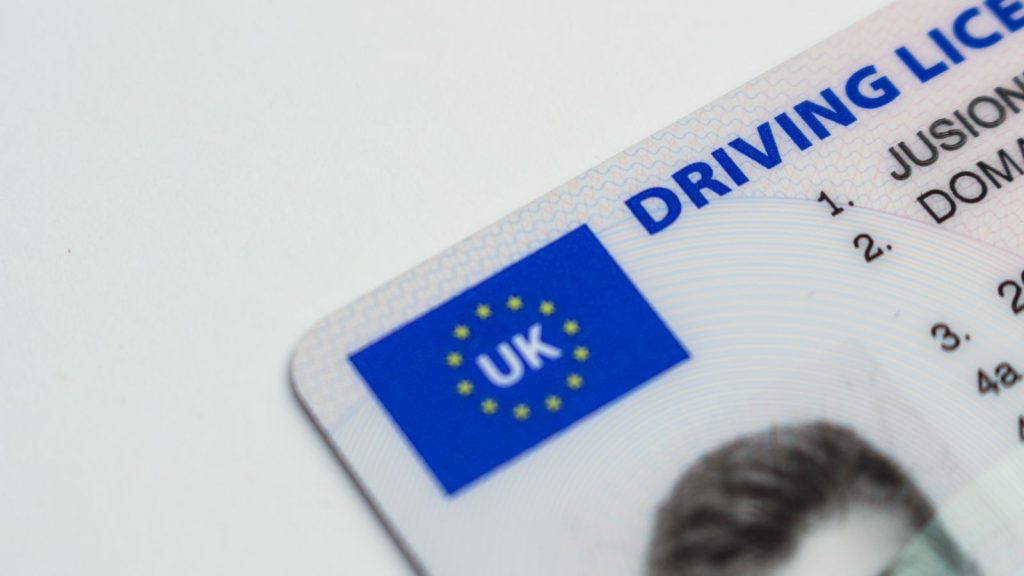
This is a five-minute job. It costs nothing, the form is short, and the new photocard lands within a week. So why does it go wrong so often during a house move?
Timing. Submit it too early and the Driver and Vehicle Licensing Agency (DVLA) posts a legal document to a house where somebody else is still living. Leave it too long and you are committing an offence that carries a fine of up to £1,000. The task is easy. The window is narrow.
This guide covers the DVLA side of a move specifically: what the online service actually asks for, when in the moving process to submit it, why your vehicle log book (V5C) stays stubbornly out of date afterwards, and which other organisations need the same address in the same week.
Summary: Changing the address on a UK photocard driving licence is free, online or by post. GOV.UK states the new licence should arrive within a week if you apply online, and you can keep driving on your existing licence while you wait. Failing to tell DVLA can cost you up to £1,000. Full details on the GOV.UK change of address page.

Your DVLA address updates at a glance
A house move triggers two entirely separate DVLA records: your driving licence and your vehicle logbook. Each has its own service, its own reference number and its own £1,000 penalty. GOV.UK runs them as separate steps in the same sequence.
Here is the whole picture before you start.
| Record | How to do it | Cost |
|---|---|---|
| Driving licence, online | GOV.UK change of address service | Free |
| Driving licence, by post | Form D1 to DVLA, Swansea, SA99 1BN | Free |
| Vehicle logbook (V5C) | GOV.UK V5C address service | Free |
| Vehicle tax Direct Debit | Tell DVLA, no need to contact your bank | Free |
| Private plate on retention | Certificate of entitlement (V750) or retention document (V778) | Free |
| New photo on the card | Added to the same application | £14 |
Worth knowing about that last row: GOV.UK confirms there is no photo fee at all if you are over 70 or hold a medical short period licence.
What the DVLA online service asks you for
You need your driving licence to hand, you must be resident in Great Britain, and you must not be banned from driving. You sign in to a GOV.UK account, and you may be asked to prove your identity using photo ID such as a passport. Requirements are listed on GOV.UK.
That is genuinely the whole list. If you have read older guides describing a long form demanding your National Insurance number and every address you have lived at for three years, put them aside. The service moved to GOV.UK sign-in, and the identity check now does that work instead.
A few situations push you off the online route entirely. Changing your name at the same time as your address means applying by post, no exceptions. Northern Ireland runs its own system through the Driver and Vehicle Agency (DVA) rather than DVLA. And if you are moving abroad, you cannot put a foreign address on a British licence at all; you contact the licensing authority in your new country instead.
Lost the licence itself? The address change route is closed to you, because the service needs the card. You apply for a replacement instead, entering the new address as part of that application. There is a fee for a replacement, so it is worth finding the card before you conclude it has gone.
Online versus the D1 postal form
Online is the right choice for almost everyone: free, and GOV.UK expects the new licence inside a week. The postal D1 route exists mainly for name changes and for people the online service cannot verify. GOV.UK covers the postal route separately.
D1 forms come from Post Office branches or direct from DVLA. You fill in the same information, enclose your current photocard, and post the lot to DVLA, Swansea, SA99 1BN.
Here is the practical catch nobody mentions until it bites. Because you enclose your photocard, DVLA holds your licence for the whole processing period. You are still legally entitled to drive. You just have nothing in your wallet to prove it.
Hiring a van for your own move? Renting a car abroad? Starting a job with a licence check? Any of those turns a missing photocard from a mild inconvenience into a stopped plan. Use the online service, or leave the postal application until moving week is behind you.
When in your move to actually submit the update
Submit on or after the day you take occupancy, never before. Your licence must show where you actually live, and the replacement photocard is posted to whatever address you enter. GOV.UK requires the record to be kept up to date, not updated in advance.
This is the point almost every competing guide skips, and it causes real problems.
Picture the organised buyer. Ten days before completion, feeling on top of things, they update DVLA. The card is printed and posted promptly, arriving at a house where the sellers are still packing. Post left with previous occupants has a way of not being forwarded, and a driving licence that vanishes means paying for a replacement and waiting all over again. Being early actively cost them.
The workable sequence is almost comically simple. Keys change hands on completion day. That evening, or the next morning once the van has gone and somebody has located the kettle, you do it from your phone. Five minutes. Renters do the same on day one of the tenancy.
If your move involves a gap, because a chain collapsed or you are staying at your parents’ between tenancies, use the address where you genuinely live and can receive post. DVLA is not asking for permanence. It is asking for accuracy. Update it again when you settle.

The £1,000 fine and what the law actually says
GOV.UK states plainly that you can be fined up to £1,000 if you do not tell DVLA when your address changes. The duty falls on full and provisional licence holders alike, whether or not you own a vehicle. See the GOV.UK guidance.
That £1,000 is a maximum, not a standard penalty, and prosecutions purely for a stale licence address are uncommon. Which has led an awful lot of people to conclude the rule does not really matter.
It matters. Just rarely in the way people expect.
The real exposure is correspondence. Statutory notices go to the address on record and nowhere else. A Notice of Intended Prosecution for a speed camera lands at a house you left, you never see it, you never respond, and failing to identify the driver is a considerably more serious matter than the original speeding was. The same mechanism turns unseen private parking charges into county court judgments. People tend to find out when a mortgage application is declined for reasons nobody can immediately explain.
The second exposure is insurance, which gets its own section below, because it is the version of this mistake that costs actual money.
Your V5C logbook is a separate record
The driving licence and the V5C vehicle logbook are two distinct DVLA records. Updating one does not touch the other, and each carries its own fine of up to £1,000. GOV.UK lists the logbook as a separate mandatory update.
This is the single most common oversight in the whole process. People finish the licence update, feel they have dealt with DVLA, and never think about the logbook again. The vehicle record then keeps pointing at the old address, which is precisely where every tax reminder, MOT notice and penalty notice will go.
The logbook has its own free online service and needs a different reference number from the one you just used. Our guide to the V5C change of address covers the full process, including what happens when your car is leased and the finance company is the registered keeper rather than you.
Two other documents hide in the same step-by-step on GOV.UK and catch people out. A private registration not currently assigned to a vehicle needs its V750 or V778 updated. And if you own a trailer you take abroad, its registration certificate needs the new address too.
Provisional, paper and photocard licences: which rules differ
GOV.UK’s online service covers both full and provisional licences on identical terms, and it is free for both. Learners have exactly the same legal duty to keep the address current, even before they have passed. Confirmed on the GOV.UK service page.
| Licence type | Online update | What to watch for |
|---|---|---|
| Full photocard | Yes | The straightforward case |
| Provisional photocard | Yes | Learners forget it entirely before the test |
| Changing name as well | No, post only | D1 form, and DVLA holds your card |
| Photocard near expiry | Better to renew | Avoids two cards inside a few weeks |
| Northern Ireland licence | No | Handled by DVA, not DVLA |
| Moving abroad | Not possible | Register with your new country instead |
The expiry overlap is worth thirty seconds of checking. Photocards run out every ten years regardless of the address printed on them, and the date sits in section 4b on the front. If yours has weeks left, renew rather than changing the address, because the renewal lets you enter the new address anyway and spares you two cards arriving in quick succession.
Students, second homes and people between addresses
Students can keep the permanent family home on the licence, provided they remain genuinely contactable there. DVLA does not expect a new application every September when halls turn over. What you should avoid is registering at a term-time address you will vacate in nine months and then forgetting all about it.
Our guide to student removals covers the wider admin around halls and shared housing.
Two properties? The deciding question is not which one you consider your main residence for tax. It is where the car sleeps. An insurer assessing a claim looks at overnight parking, and a licence registered to a rural second home while the vehicle lives on a London street is an argument you do not want to be having after a theft.
No fixed address at all, staying with friends between tenancies? Use wherever post reliably reaches you. There is no minimum occupancy period. An accurate temporary record beats an inaccurate permanent one every single time.
Car insurance and the address mismatch that costs money
Your motor insurer is a completely separate notification and updates nothing automatically. Postcode is one of the heaviest-weighted factors in motor premiums, driven by local claim frequency, theft rates and vehicle density, so moving can push your price in either direction. Urban to rural often drops it. The other way round, less happily.
Either way it has to be declared, and declaring it late is what creates the damage. Insurers treat an undeclared address change as material non-disclosure, which at claim stage means a proportionate reduction or, in serious cases, a voided policy. Ring them the same week you update DVLA and keep the reference number.
The same logic applies to contents cover, which is worth reviewing alongside what home insurance actually covers during a move.
The other address changes that belong in the same week
Six notifications carry either a legal duty or a financial penalty if missed: the DVLA licence, the V5C, your council for council tax, the electoral register, your motor and home insurers, and HM Revenue and Customs (HMRC) if you are self-employed or receive benefits.
Do them in one sitting rather than as they occur to you at inconvenient moments. Almost all are online, free, and under ten minutes each.
- Local council. Both authorities need telling, and billing runs pro rata from your move date. Our guide on council tax when moving home has the start and stop dates.
- Electoral register. Lenders use the roll for identity verification during mortgage applications, so this one quietly matters more than it looks.
- Banks and card providers. No legal duty here, but address mismatches are a common cause of declined transactions and failed credit checks.
- HMRC. Essential if you are self-employed, receiving benefits or claiming a state pension.
- GP and dentist. Catchment-based, and the delay only becomes obvious when you actually need an appointment.
- Royal Mail redirection. Paid, but it is the safety net for everything you forget.
For the whole sequence rather than the DVLA slice, our complete moving house checklist runs from eight weeks out to your first week in the new place.
When this is not your first priority
Most guides will never tell you to wait, because the safe advice is always do it now. The honest position has more nuance, and there are three cases where immediate action is the wrong call.
Moving into short-term accommodation for four weeks while a purchase completes? Updating twice inside a month means two card issues and a stretch with nothing in your wallet. Use the address you will actually settle at, once you trust the completion date. If the interim arrangement drags past a couple of months, update it properly.
Hiring the van yourself? Do not start a postal application the week before. Hire desks want the physical licence in front of them and will run a DVLA check code against it. No card, no van, and discovering that at eight in the morning on moving day is a genuinely bad start.
And if your photocard expires within weeks, renew instead. Same outcome, one card, no wasted fortnight.
What we found mapping the address-change sequence
We set the published guidance for every address-related notification a UK household makes during a move against each other, then sorted them by how quickly each produces a physical document at the new address. The pattern explains why so many people end up with post going to the wrong house for months.
| Notification | Posts something to the new address? | Why the order matters |
|---|---|---|
| V5C logbook, online | Yes, a new logbook | Record updates instantly, so do it first |
| Driving licence, online | Yes, a new photocard | GOV.UK expects it within a week |
| Council tax | Yes, your first bill | Billing runs pro rata from the move date |
| Electoral register | Confirmation letter | Slowest of the set, so start it early |
| Driving licence, postal D1 | Yes, and DVLA holds your card meanwhile | The route that leaves you without ID |
Two things stood out. The logbook is the faster and simpler of the two DVLA records, yet almost nobody does it first. And every single item on that list posts something to the new address, which is the underlying reason the whole batch should wait until you hold the keys. Doing the admin early feels organised, and quietly guarantees that five separate documents land on somebody else’s doormat.
How EcoGreen Movers fits into moving week
Admin like this only feels manageable when moving day itself is not chaos. EcoGreen Movers is a nationwide UK removals company running low-emission vehicles and reusable crates rather than single-use cardboard, which means less packaging at the far end and fewer evenings spent flattening boxes when you would rather be clearing your address changes.
We handle residential moves across the country, with dedicated teams for house moves in London, removals in Manchester and removals in Edinburgh. For a fixed quote rather than an estimate that drifts on the day, get in touch for a quote.
Frequently asked questions
How much does it cost to change the address on a licence?
Nothing, by either route. GOV.UK confirms the change is free online and by post. The only charge is £14 if you want a new photograph on the card at the same time, and even that is waived if you are over 70 or hold a medical short period licence. Any website charging to process the change is a third-party service, not DVLA.
Is it an offence to have an old address on a driving licence?
Yes. GOV.UK states you can be fined up to £1,000 for not telling DVLA when your address changes. The duty applies to provisional as well as full licence holders, and whether or not you own a vehicle.
Can I still drive while waiting for the new card?
Yes. GOV.UK confirms you can keep driving while you wait. The practical issue is not legality but proof: apply by post and DVLA holds your card, so you have nothing to show a van hire desk or a new employer.
Does updating my licence also update my vehicle logbook?
No. They are two separate DVLA records, each needing its own notification and each carrying its own penalty. This is the most common oversight after a move. See our guide to updating the vehicle logbook.
What if I am moving abroad?
You cannot put an overseas address on a British driving licence. GOV.UK directs you to contact the driving licence authority in your new country of residence instead.
In summary: five minutes, once you have the keys
Do it online. Do it after you take occupancy. Do the V5C in the same sitting, because it is a separate record with a separate fine and nobody remembers it. Then tell your motor insurer in the same week, because the postcode mismatch is the version of this mistake that actually costs money.
The entire DVLA element of a house move is about fifteen minutes of work. What makes it feel hard is attempting it at eleven at night in the middle of an unpacking crisis. Book the move properly, get the boxes off the floor by day two, and it becomes a coffee-break job.